Foundation
Studio I | Environmental Product Design
Studio I is the first dedicated environmental product design studio in the curriculum.
It introduces students to design as an iterative process of understanding people, framing needs, generating possibilities, making ideas tangible, and learning from evidence. I coordinate ENVD 1010 as a foundational course serving more than 200 students each fall, which means aligning faculty, mentoring teaching assistants, and working to create a coherent experience across sections.
The course develops fluency in concept ideation, sketching, technical drawing, model making, prototyping, user identification, design thinking, optimization, and presentation, taught as connected practices rather than isolated skills. The selected work shows students applying this process to education, neonatal care, study habits, and avalanche safety.
Studio Framing
Consistency and Belonging at Scale
Teaching the first studio in a design sequence carries a particular responsibility. Students are learning skills, but they are also deciding what design is and whether they can imagine themselves becoming designers. Coordinating a course of more than 200 students has made me attentive to the relationship between consistency and belonging: a shared curriculum should give every student a dependable foundation without flattening the distinct perspectives of individual instructors.
The shift from a self-directed object to a user-based product is central to the course. It asks students to move beyond preference and begin listening carefully to another person, learning that an interview is not a formality, that a problem statement can change as evidence accumulates, and that a prototype is valuable because of what it reveals rather than how finished it looks.
I am proud of the range visible in the final work. What connects the projects is a willingness to make ideas specific: to draw mechanisms, identify materials, model interactions, test form, and explain why a proposal should exist.
School Super Sidekick
A tangible classroom companion and connected bracelet respond to the loss of physical interaction in remote elementary education. The proposal combines playful character design with teacher-controlled gestures such as a raised hand, a high five, a hug signal, and attention prompts, connecting a specific audience and educator interview to a prototype, interaction sequence, and technical resolution.
Click any image to view full size
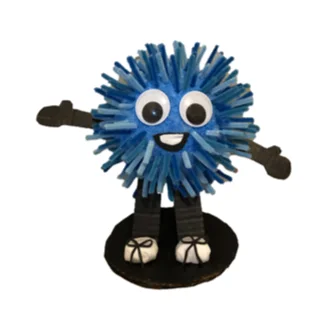
School Super Sidekick prototype
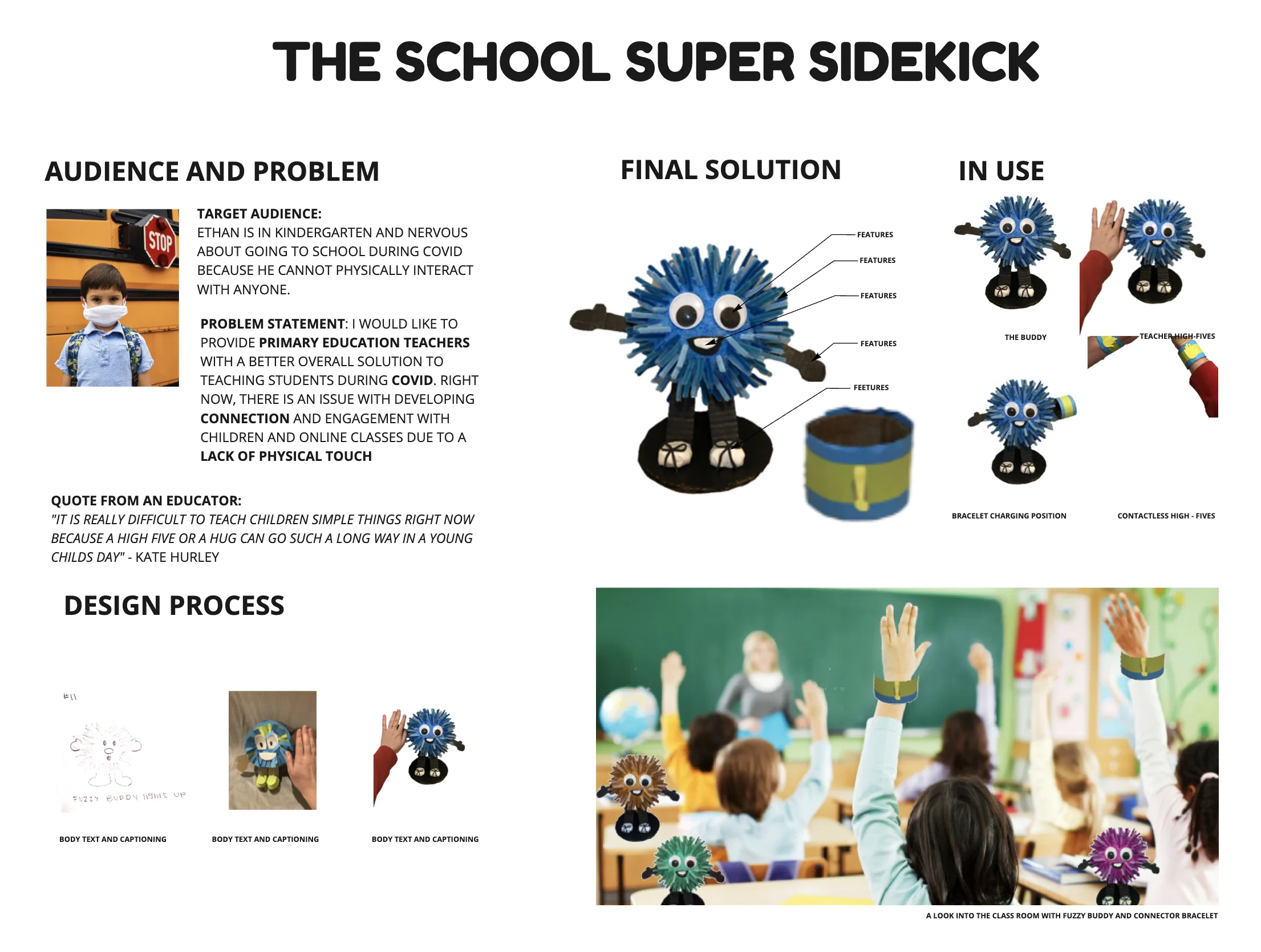
School Super Sidekick design proposal
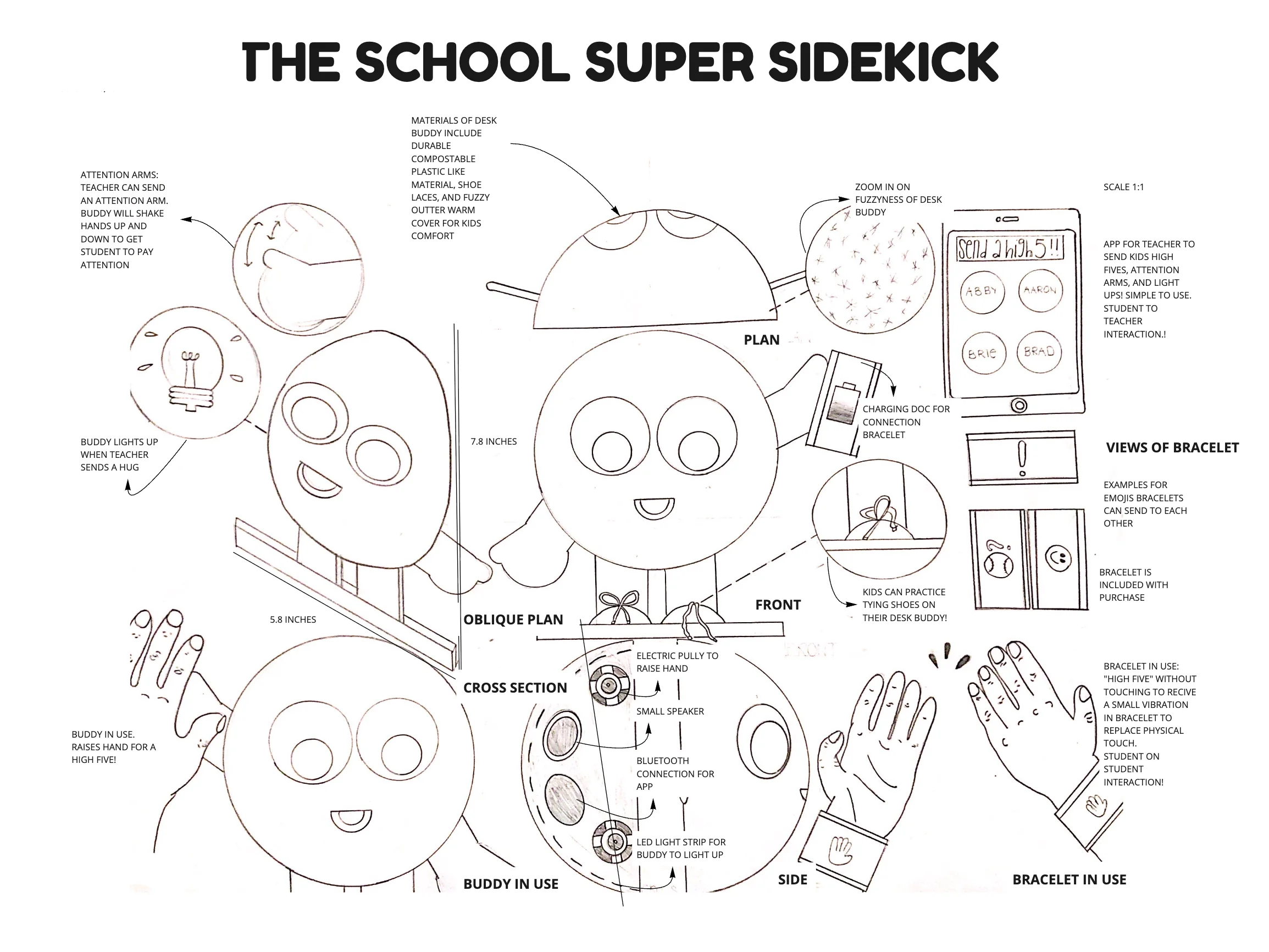
School Super Sidekick technical drawings
Care Crib
Care Crib explores how premature infants and their parents might maintain reassuring physical connection during neonatal care. A soft heated liner and adjustable protective shell are paired with a ring that transmits a parent's heartbeat, demonstrating empathetic interviewing, secondary research, iterative development, material thinking, and detailed technical communication.
Click any image to view full size
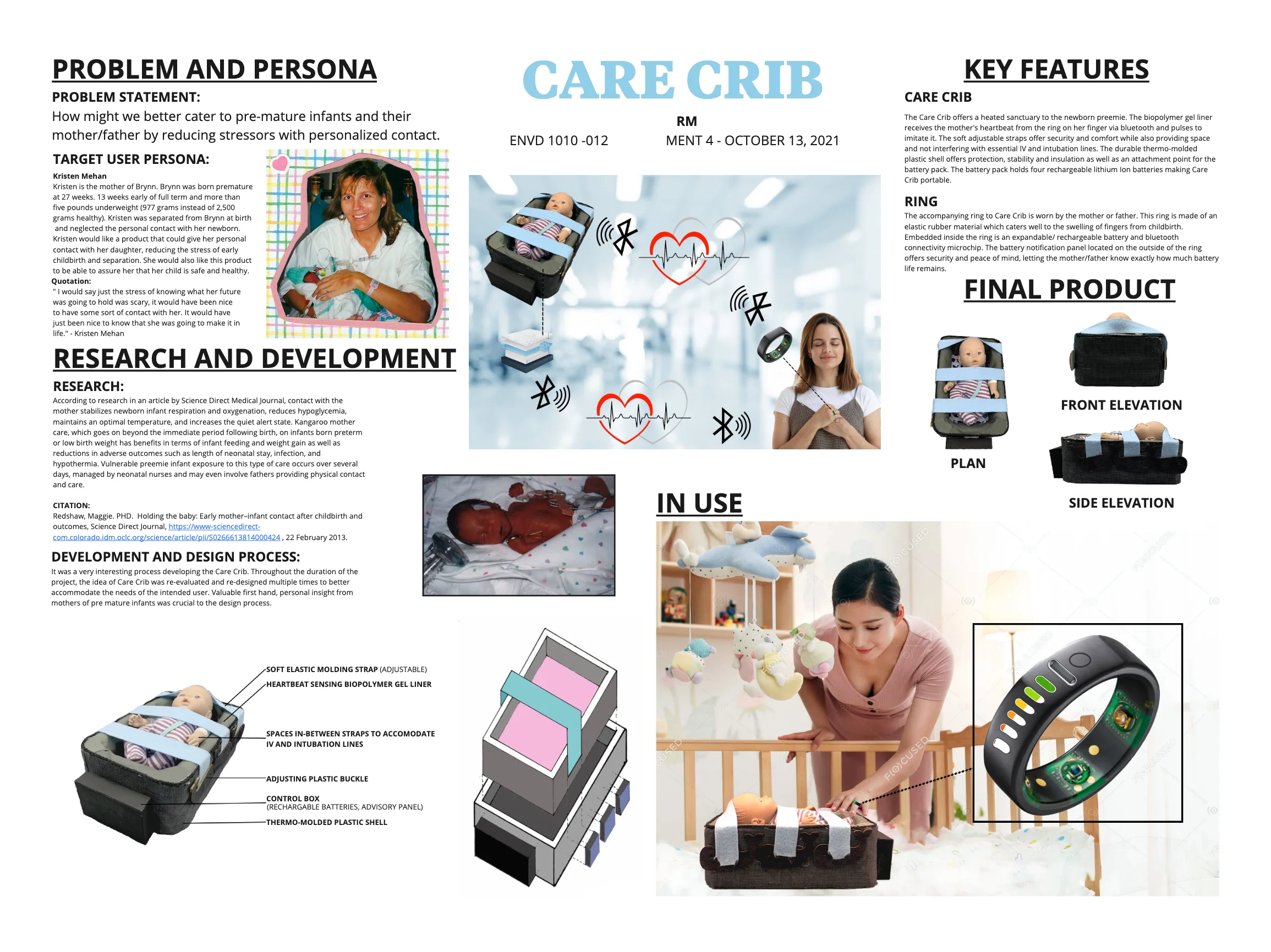
Care Crib user research and design proposal
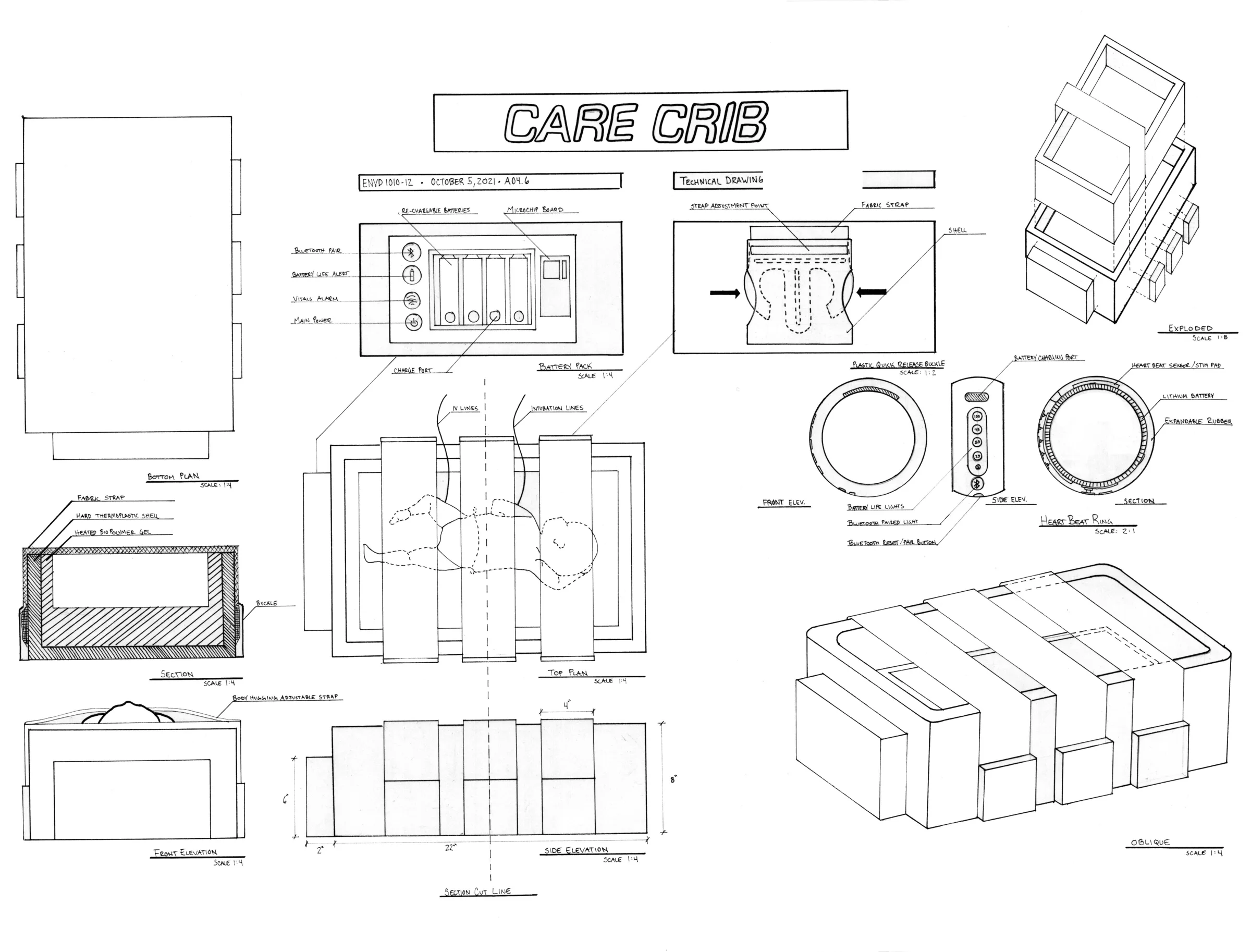
Care Crib technical drawings
Procrasti-Watch
Procrasti-Watch addresses procrastination through a wearable interface for assignments, focus intervals, breaks, and progress cues, translating an everyday student experience into a clear problem statement developed through interface scenarios, physical form, and technical drawings.
Click any image to view full size
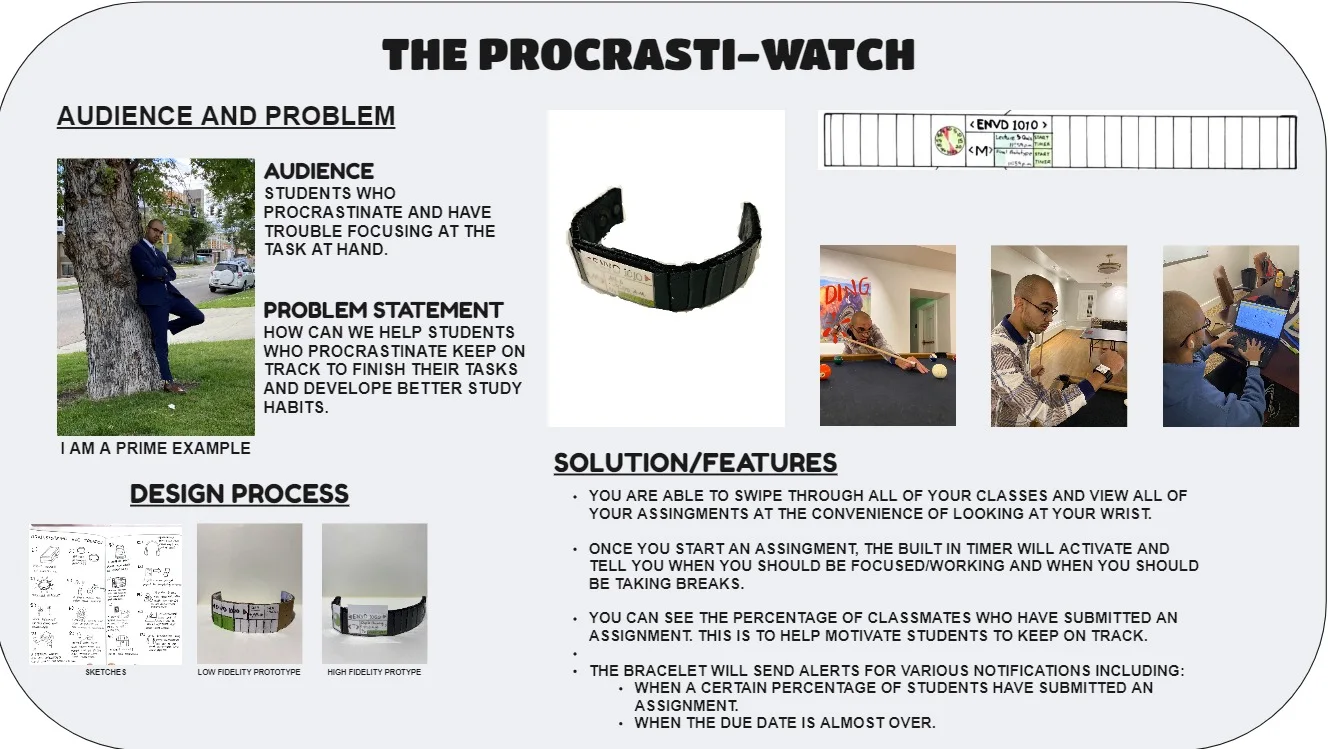
Procrasti-Watch design proposal
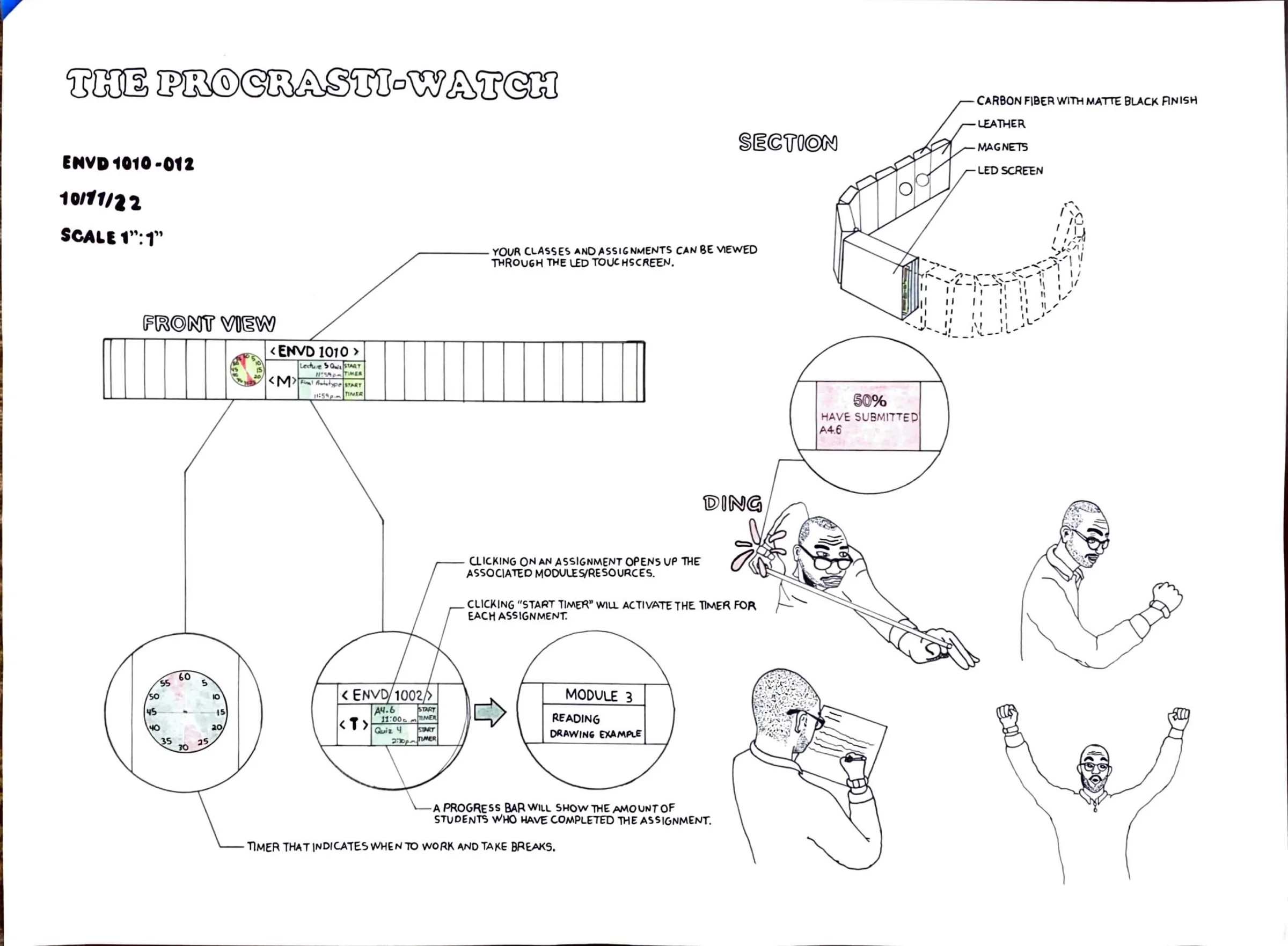
Procrasti-Watch technical drawings
Snowy the Bear
Snowy the Bear reframes avalanche awareness as a coordinated public-information campaign. A trail marker, danger map, infographic, stickers, and recognizable character identity work together to communicate prevention and emergency response, showing a student expanding product design into service, communication, and behavior change.
Click any image to view full size
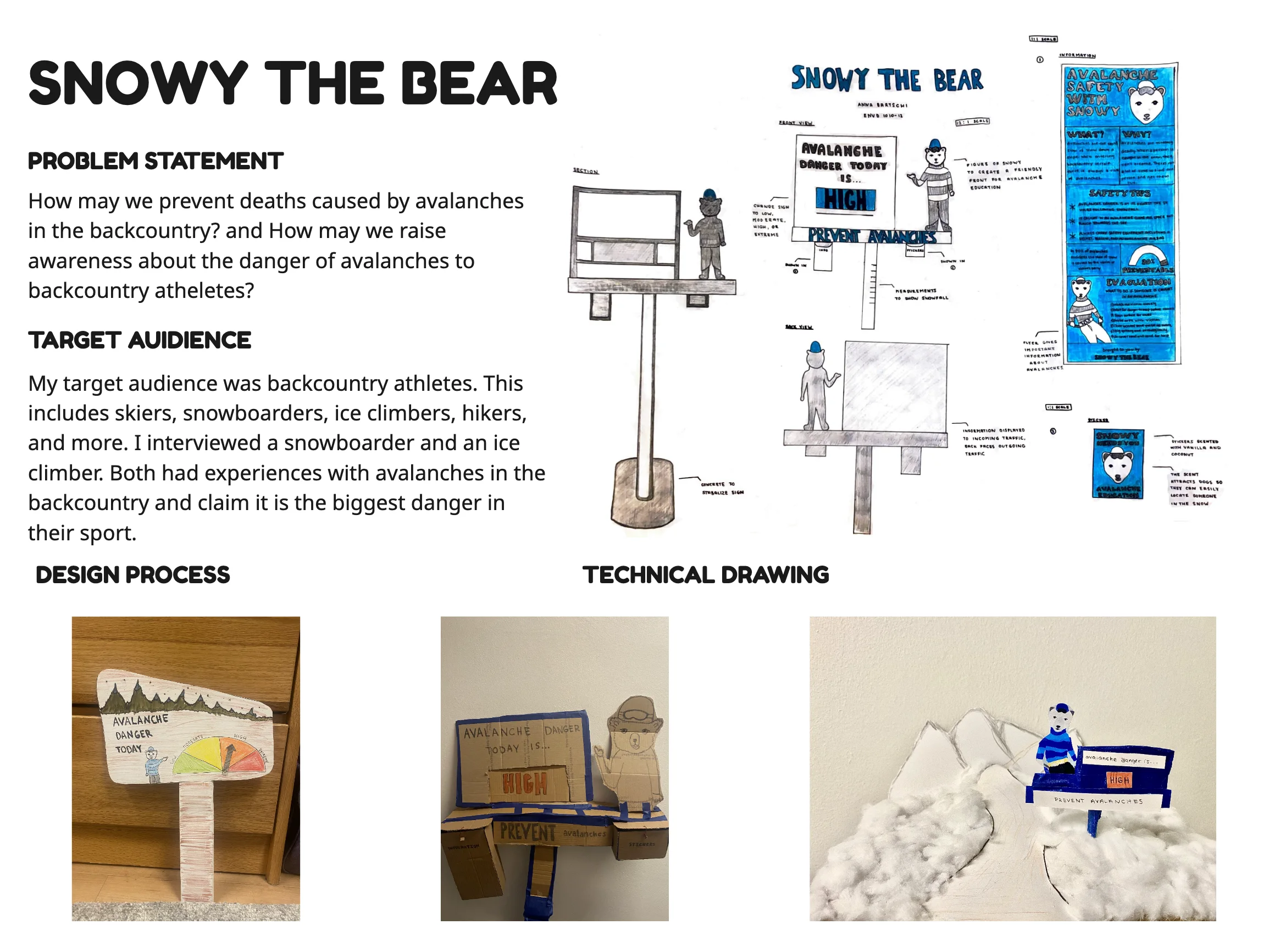
Snowy the Bear design process and trail marker
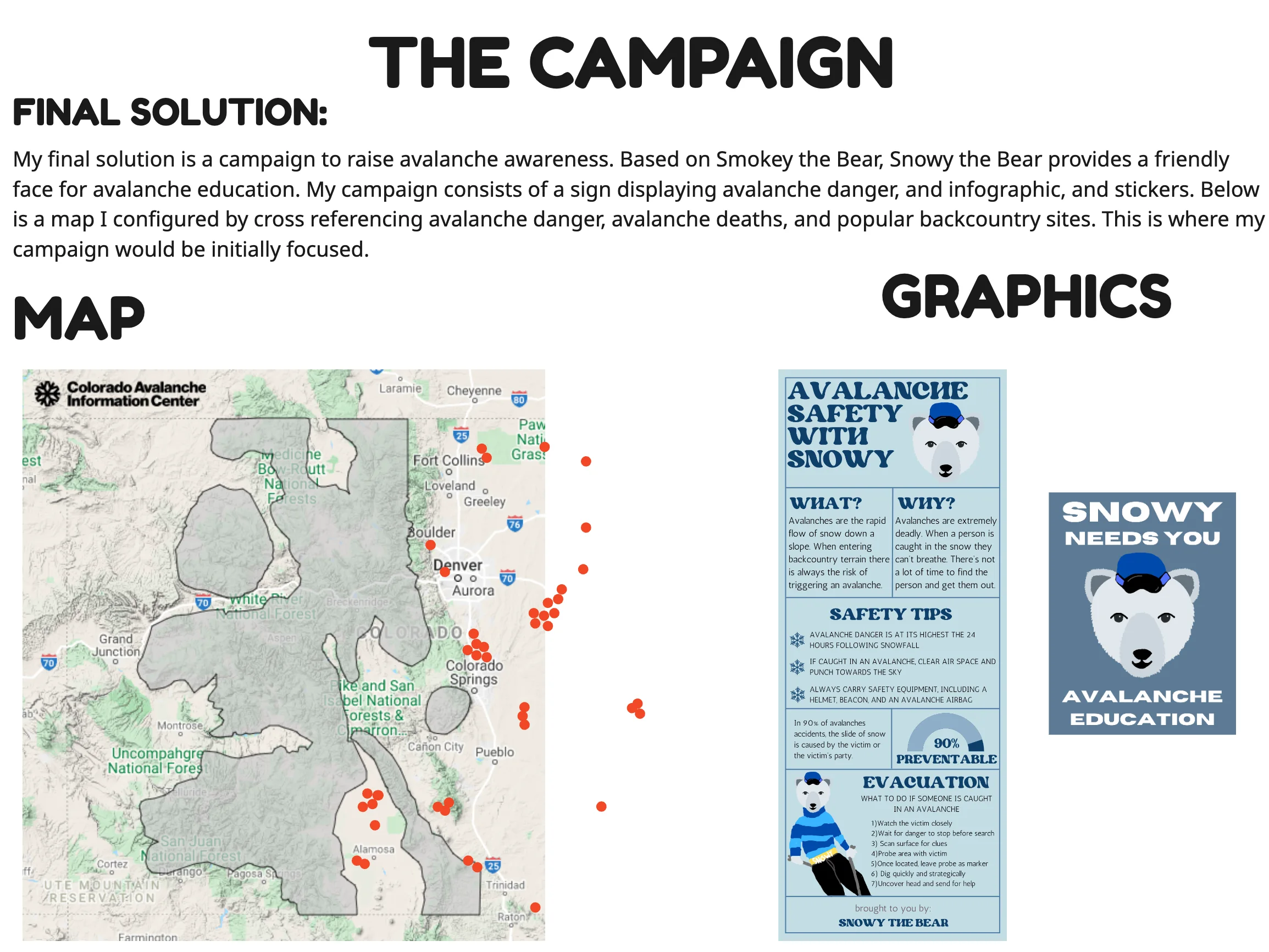
Snowy the Bear campaign and information system
Student Experience
4.83 / 5
Opportunities to reflect on learning
4.83 / 5
Assignments requiring original or creative thinking
4.78 / 5
Questions and discussion encouraged
94.74%
Response rate, Spring 2023