Foundation
Luminaire Studio
Every lamp in this studio began with something noticed at Denver Botanic Gardens, not with a shape someone wanted to make.
We started our design exploration looking for inspiration from the environments of Denver Botanic Gardens, built or natural, architecture or dandelions. Those observations and inspirations became the conceptual guides for their luminaire design process.
From there, ideas moved through sketches, Rhino models, and paper and cardboard mockups toward a demanding final outcome: a fully working light fixture, resolved in structure, material, wiring, heat, diffusion, shadow, and scale, and built within eight weeks.
Studio Framing
Craft as a Way of Thinking
We chose the luminaire as our first product-design challenge because it disarms overconfidence: everyone thinks they know what a lamp is, until structure, material, wiring, heat, diffusion, shadow, and scale all have to resolve together at once. Denver Botanic Gardens gave the studio a shared source of inspiration rather than a set of forms to copy, a leaf pattern, a rock formation, the way light pools in a courtyard, and every student found their own reason to care inside that shared ground.
The real test came when the work left the screen. A rendering can look finished before its material logic has been tested, a prototype cannot lie to you the same way. Full-scale fabrication exposed proportion, stability, light leakage, tolerances, wiring, and the order everything had to go together in. Craft isn't decoration added after the design is done, it's one of the only ways an idea proves it's actually credible.
What I'm proudest of is how differently these turned out. Same constraints, same eight weeks, same garden, and none of these eight lamps read like a formal exercise. I feel lucky to work with students who take a shared prompt and each find something entirely their own inside it.
OWL
Complexity and simplicity held in tension. A spherical light sits within a 136-piece waffle-cut timber enclosure. The rigid grid recalls both a Buddhist temple at sunset and the hollow of a tree, while the glowing center gives the fixture the watchful presence of an owl.
Click any image to view full size
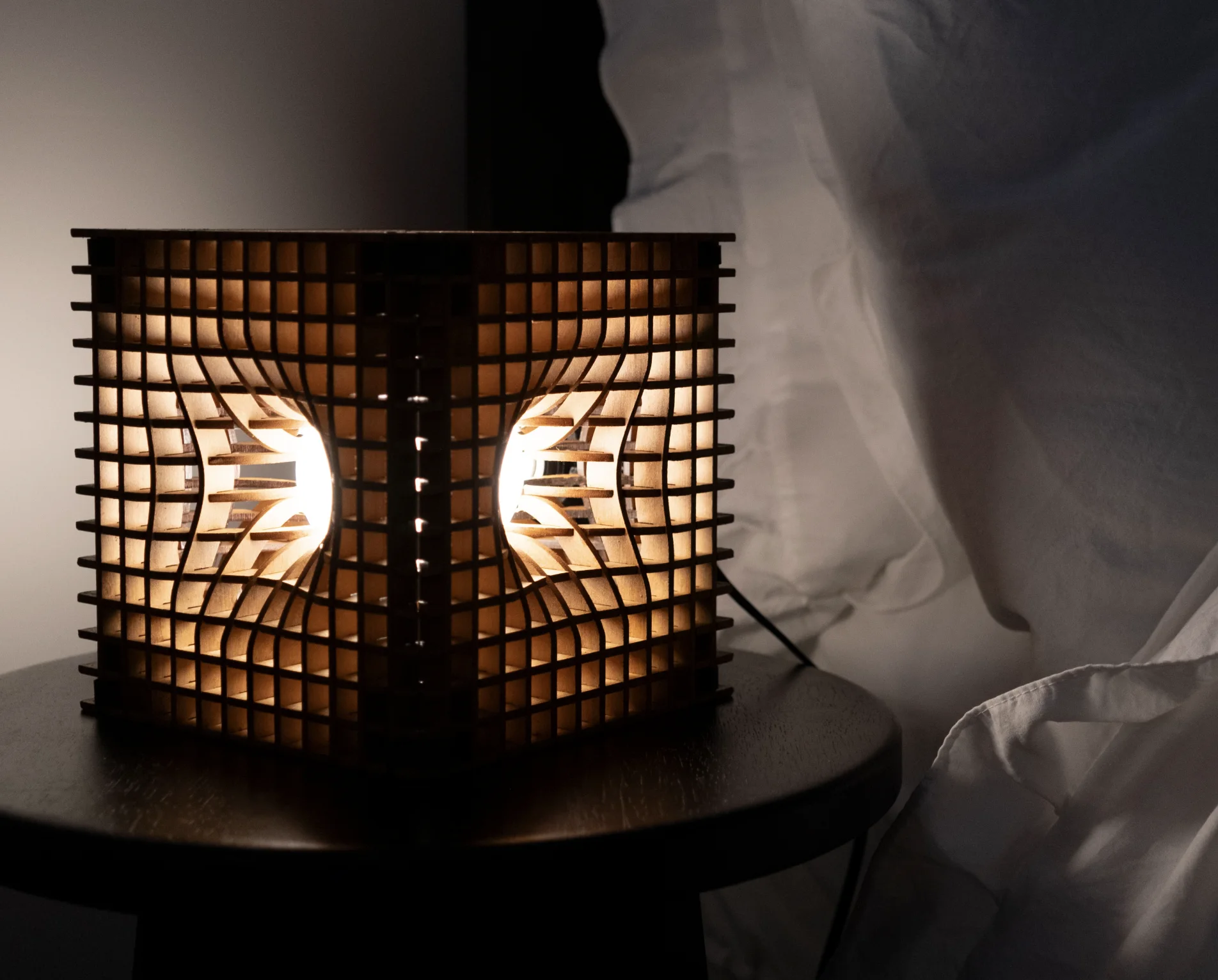
OWL finished luminaire
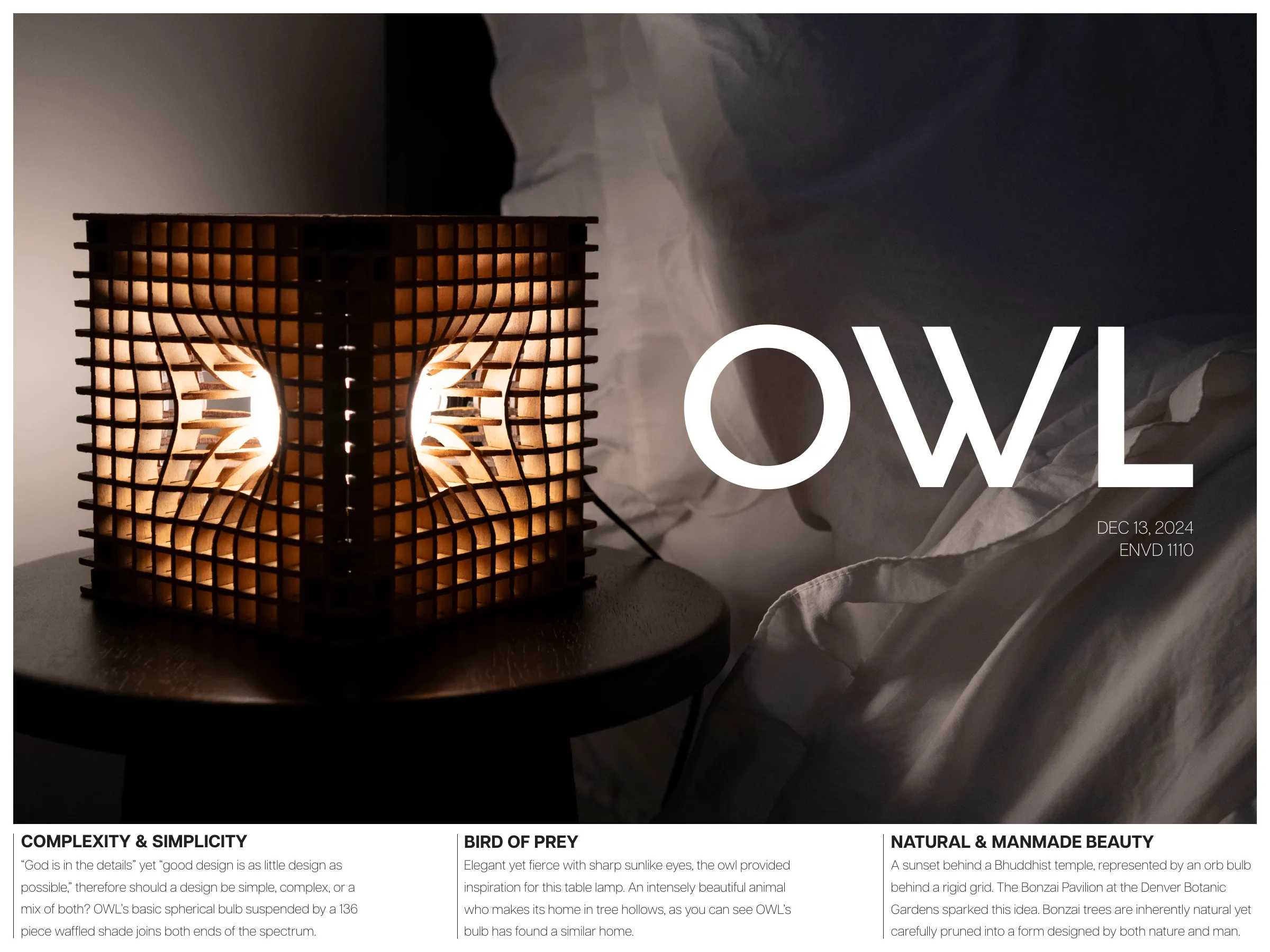
OWL concept and final design
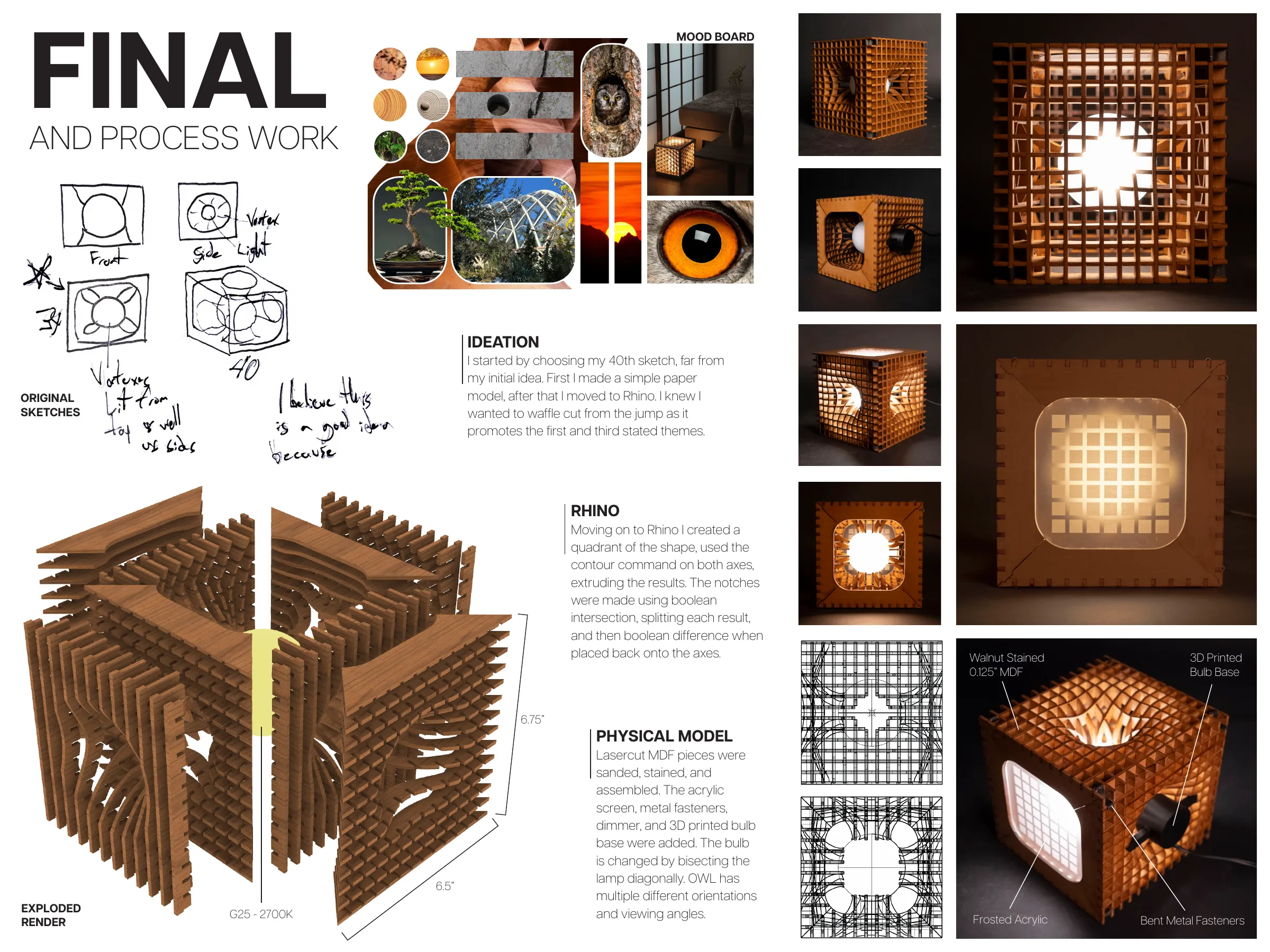
OWL process and development
OHMU
Geology, biomimicry, and warm light. The fixture combines a rock-like body with a honeycomb aperture inspired by patterns observed at Denver Botanic Gardens, a tactile exterior and internal glow creating a compact study in rugged material character and ecological delicacy.
Click any image to view full size
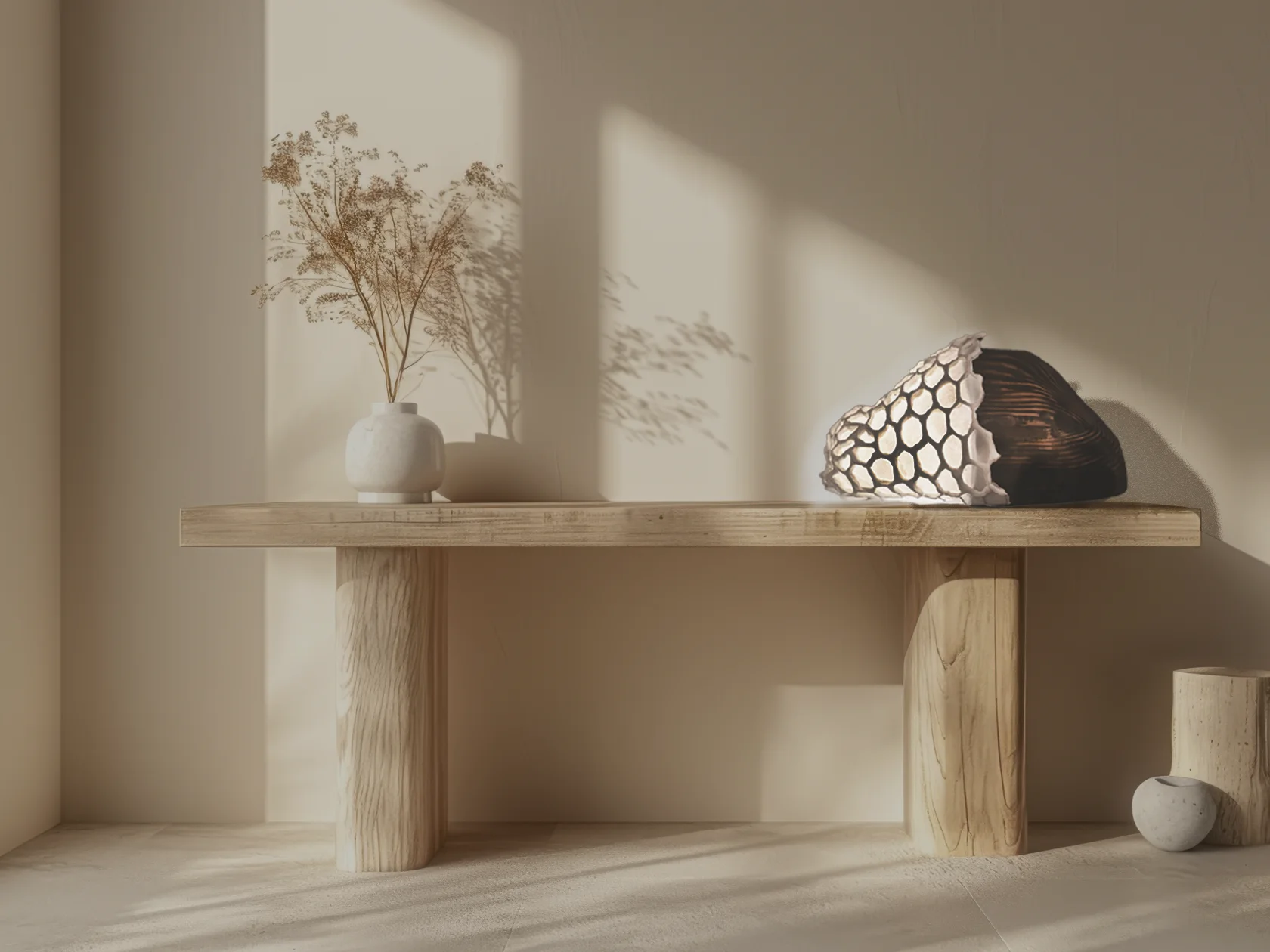
OHMU finished luminaire
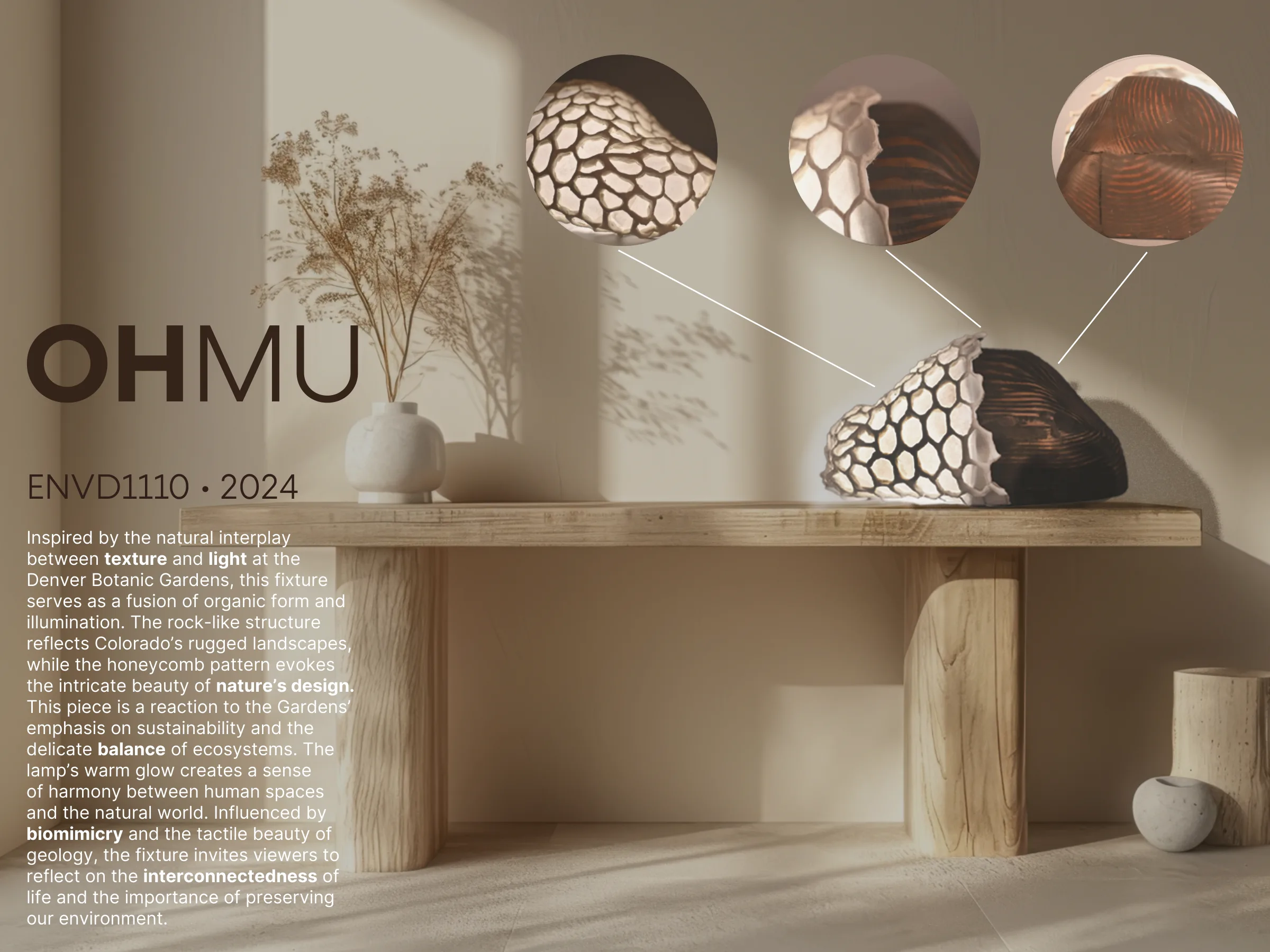
OHMU concept and final design
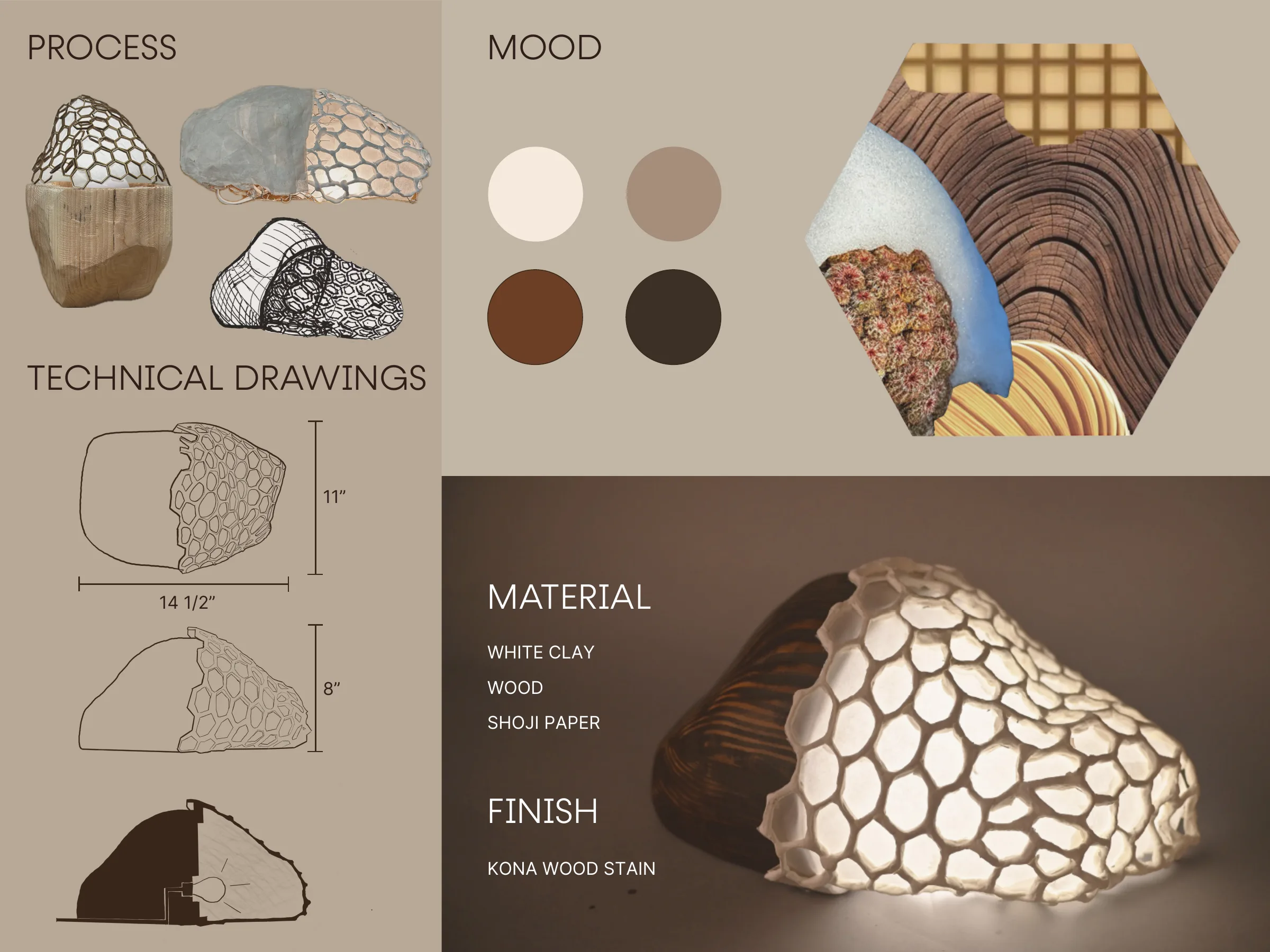
OHMU process and development
Frond
Botanical structure becomes filtered illumination. Layered leaf forms gather around a pendant source, using repetition, overlap, and translucency to transform the recognizable silhouette of foliage into light and shadow.
Click any image to view full size
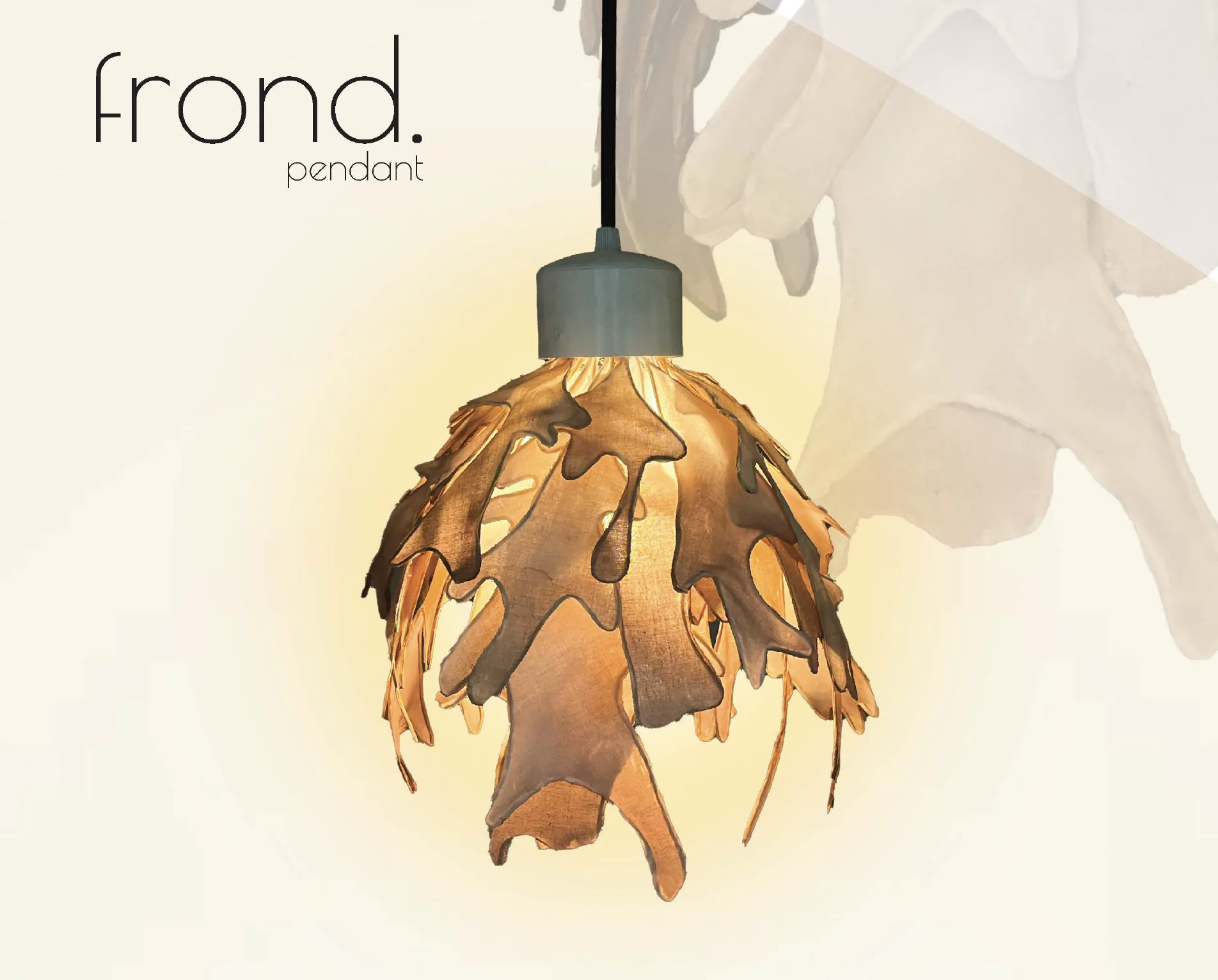
Frond finished luminaire
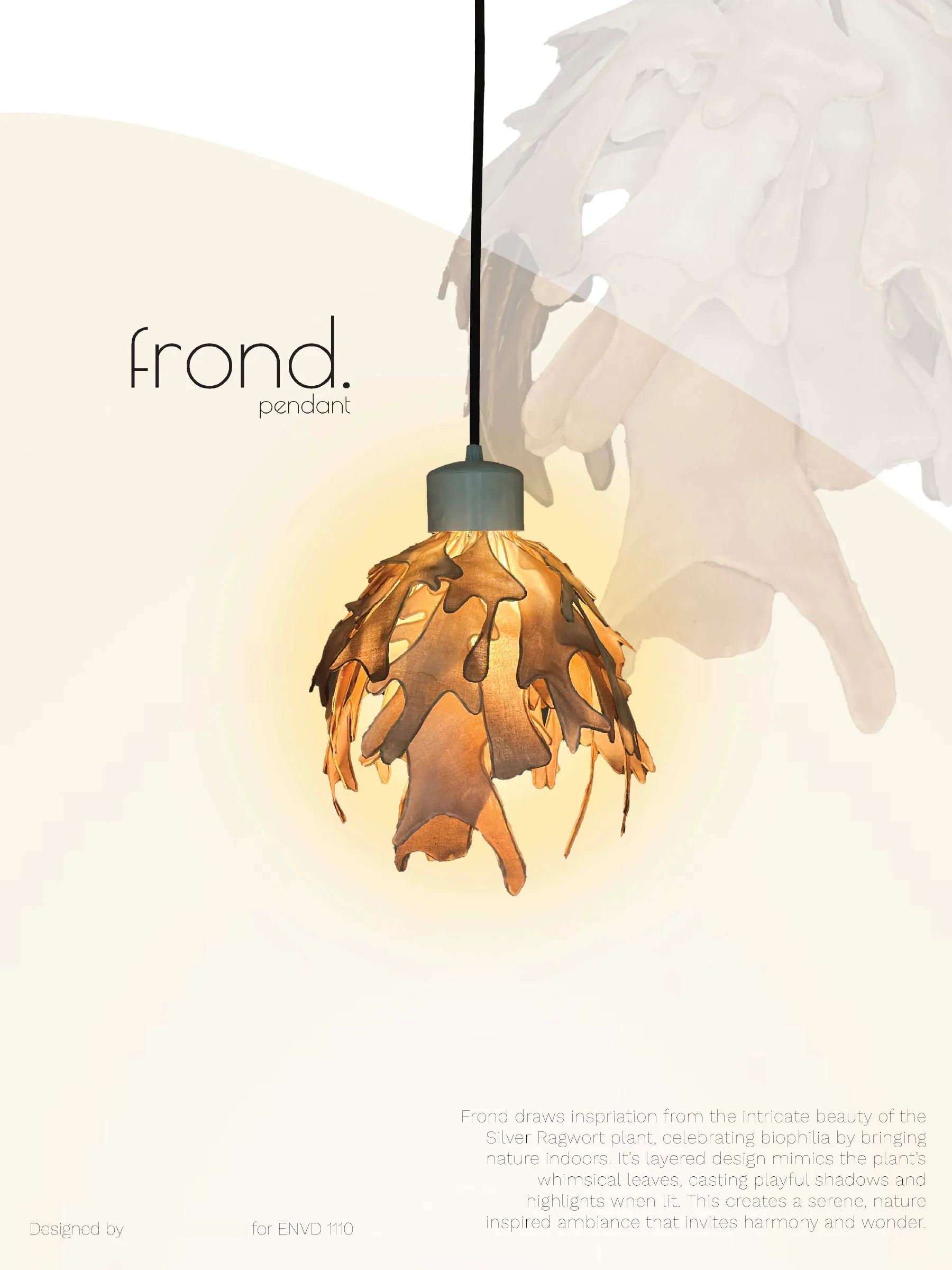
Frond concept and final design
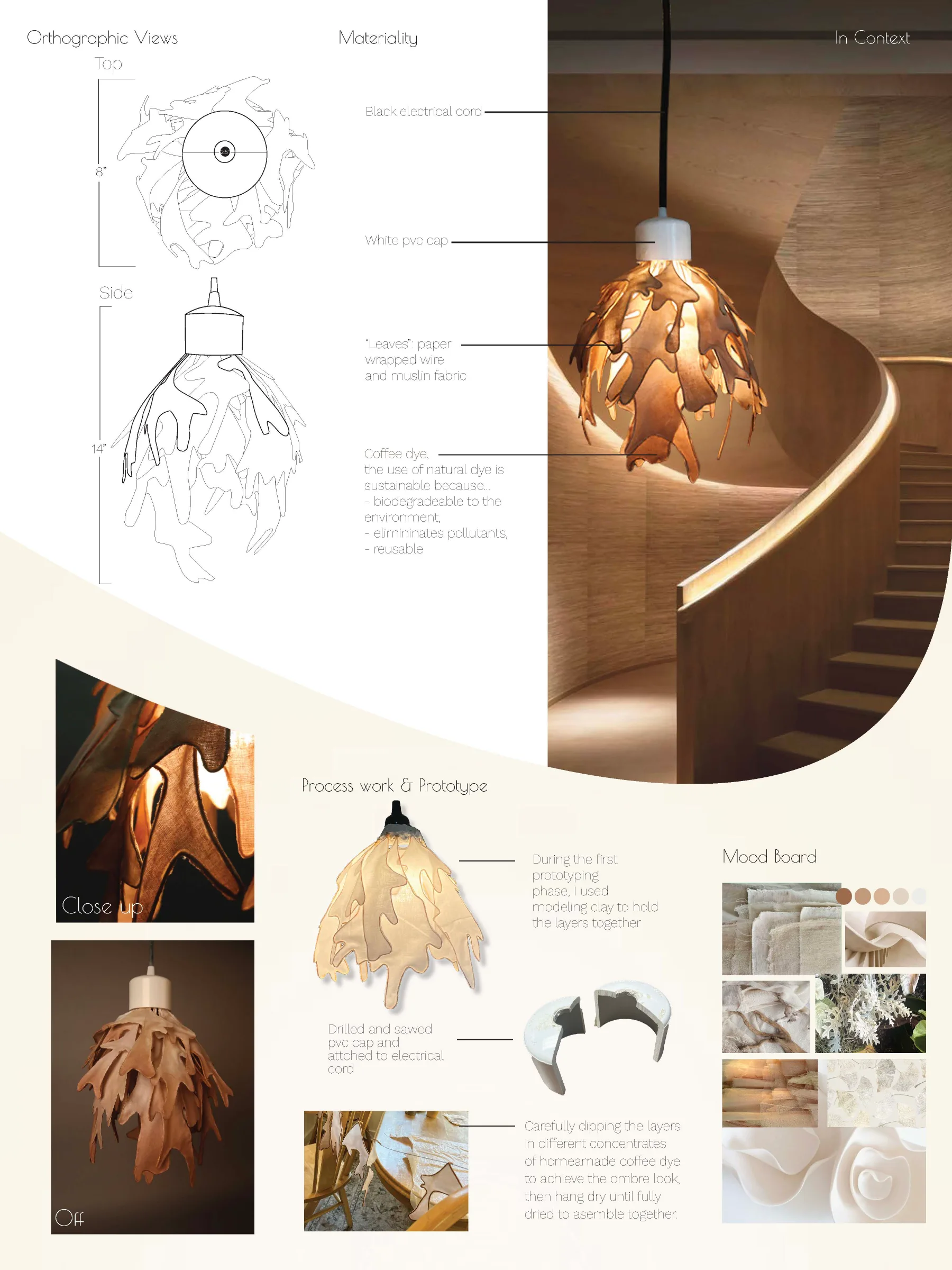
Frond process and development
Ember
A small source of seasonal warmth. Faceted timber elements gather around the light like a glowing coal or a branch emerging from a trunk, perforations and layered edges creating points of brightness that recall both fire and the eyes of aspen bark.
Click any image to view full size
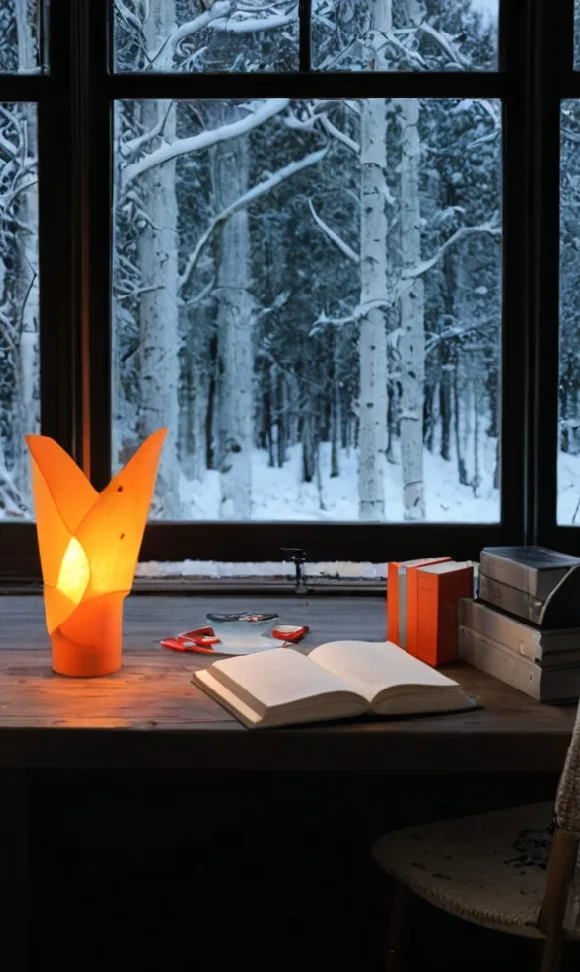
Ember finished luminaire
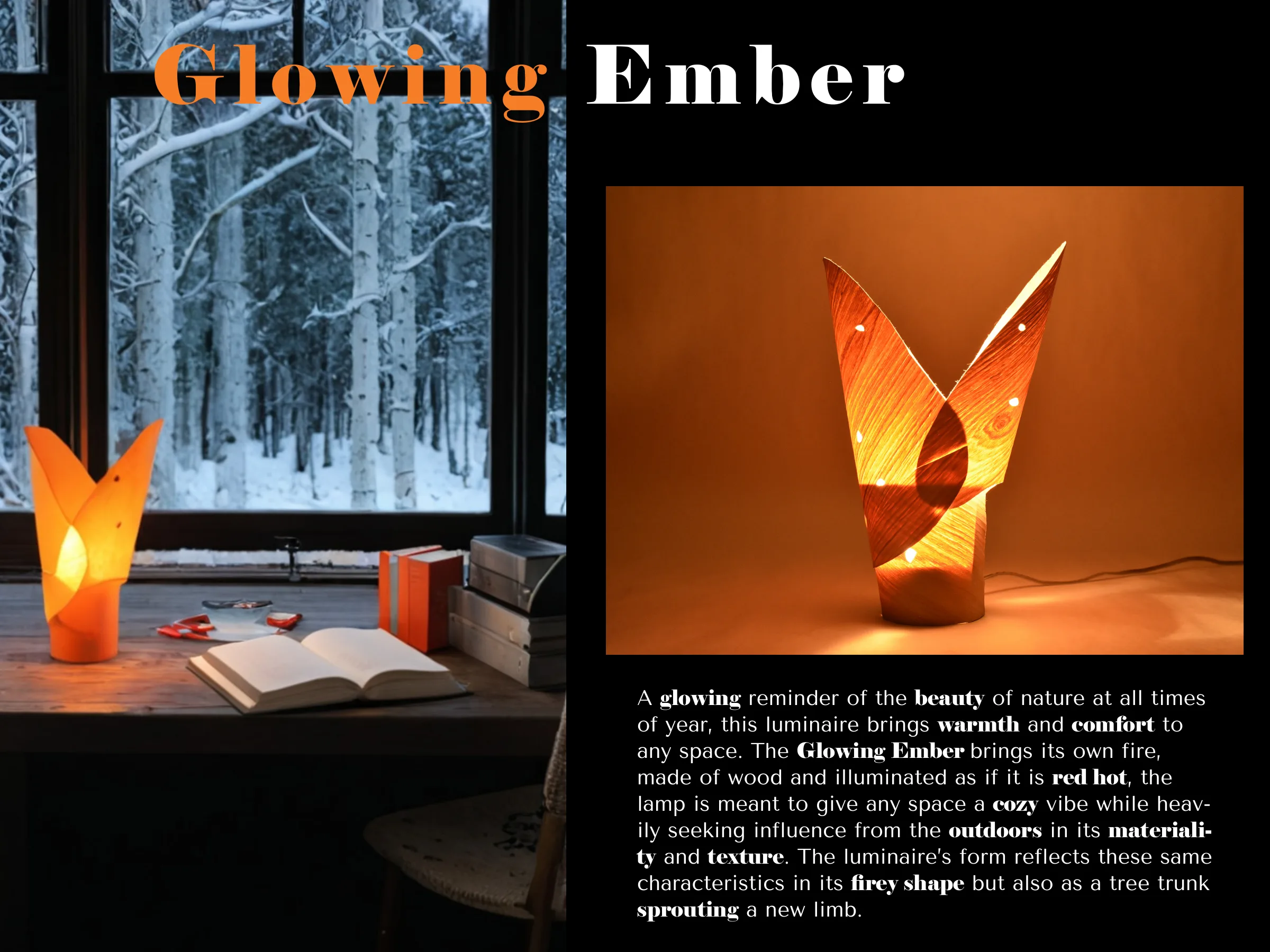
Ember concept and final design
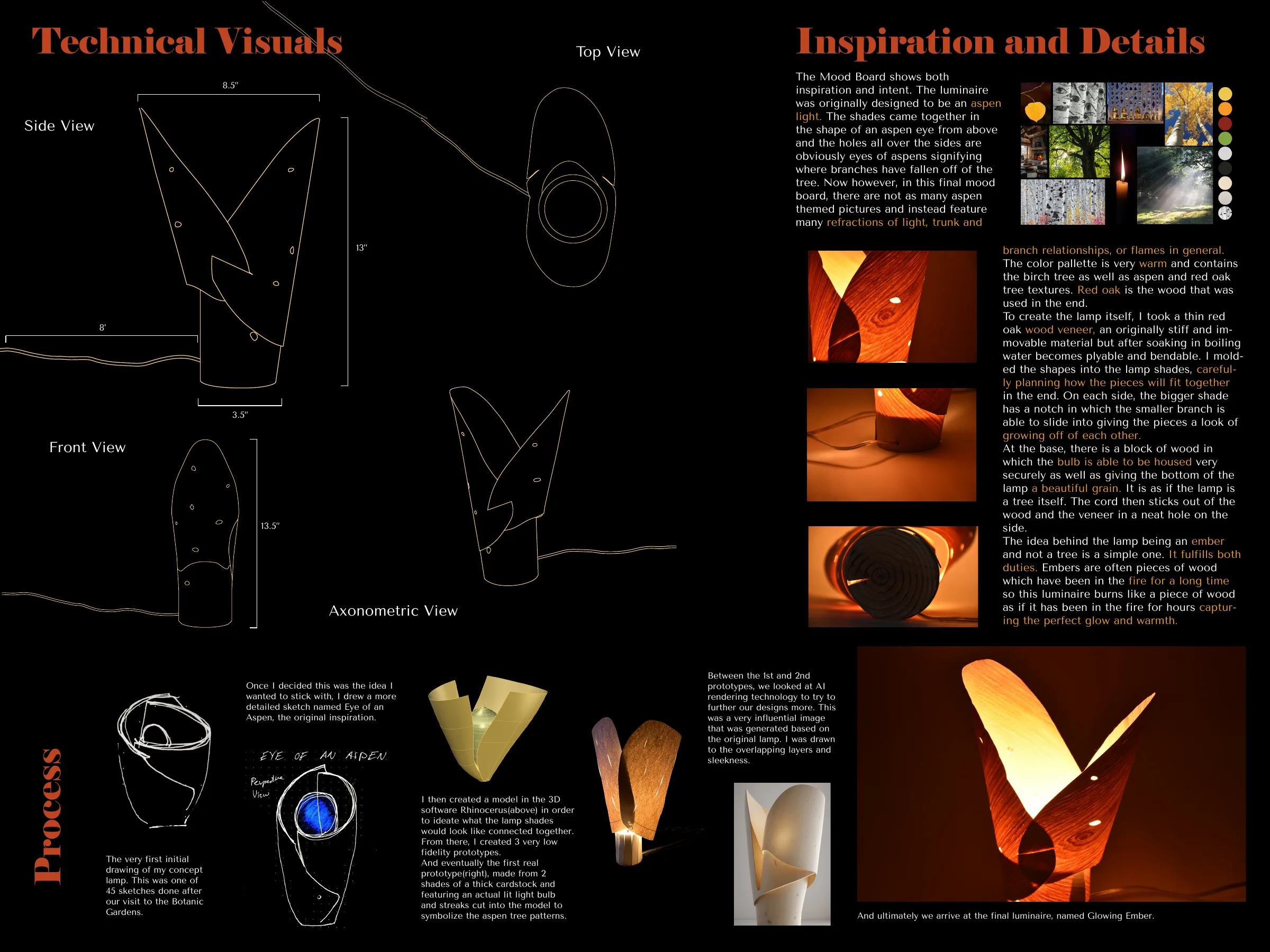
Ember process and development
Nimbria
Light for a dormant winter pond. Inspired by the lotus and Japanese garden traditions, Nimbria was conceived as a floating luminaire for the Monet Pond at Denver Botanic Gardens, using textile, metal, rubber, and light to occupy the seasonal absence of aquatic plants.
Click any image to view full size
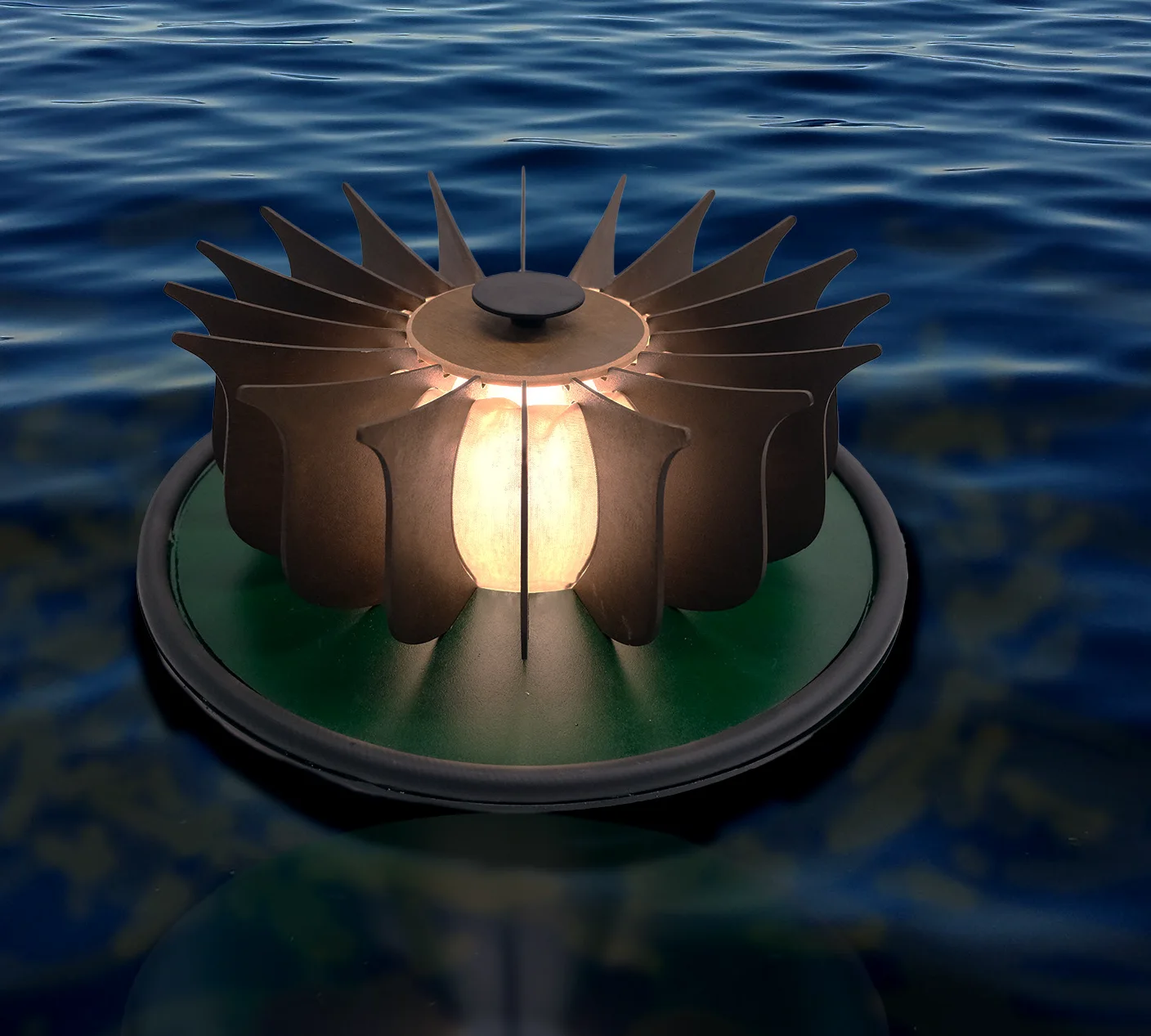
Nimbria finished luminaire
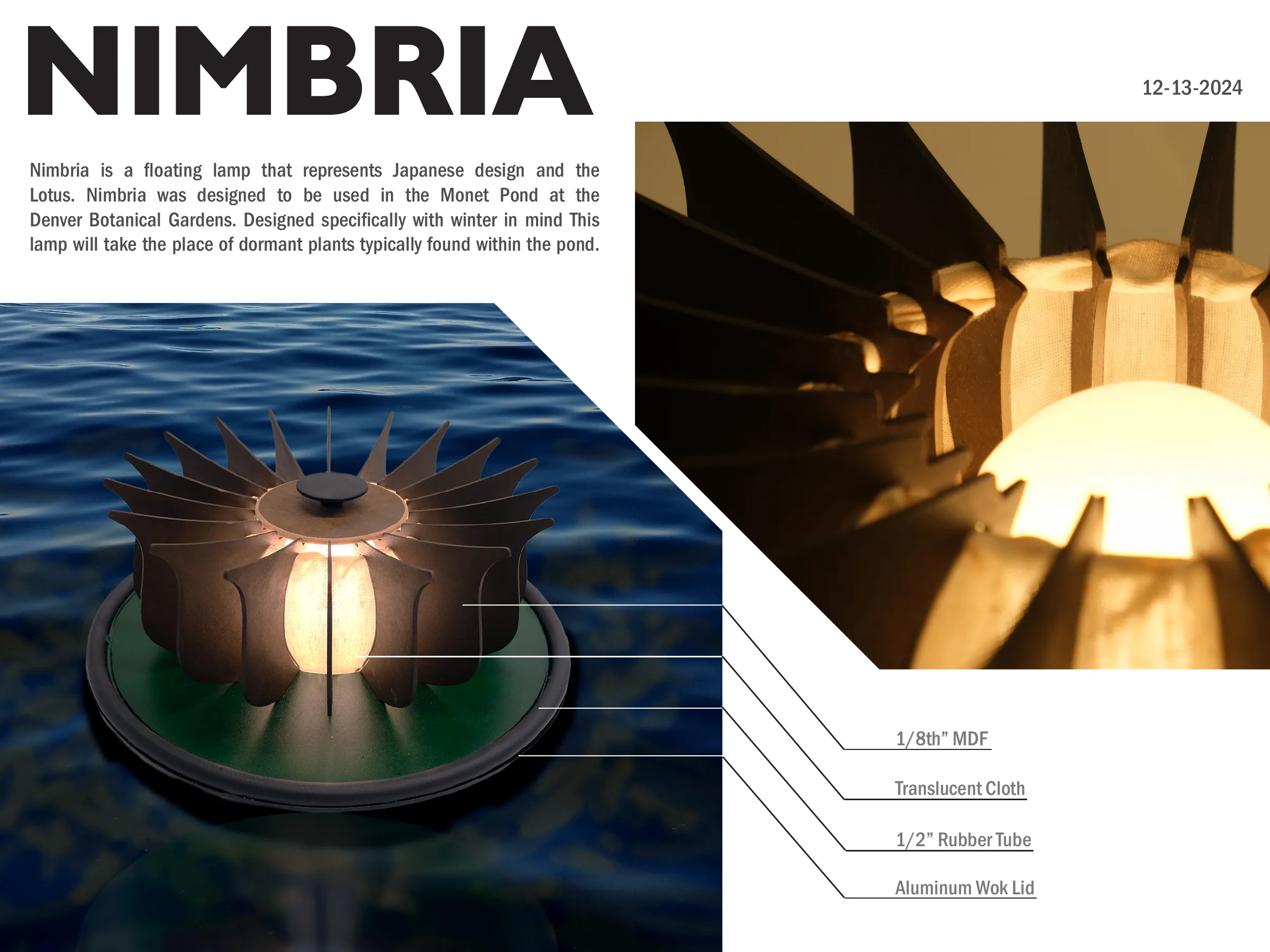
Nimbria concept and final design
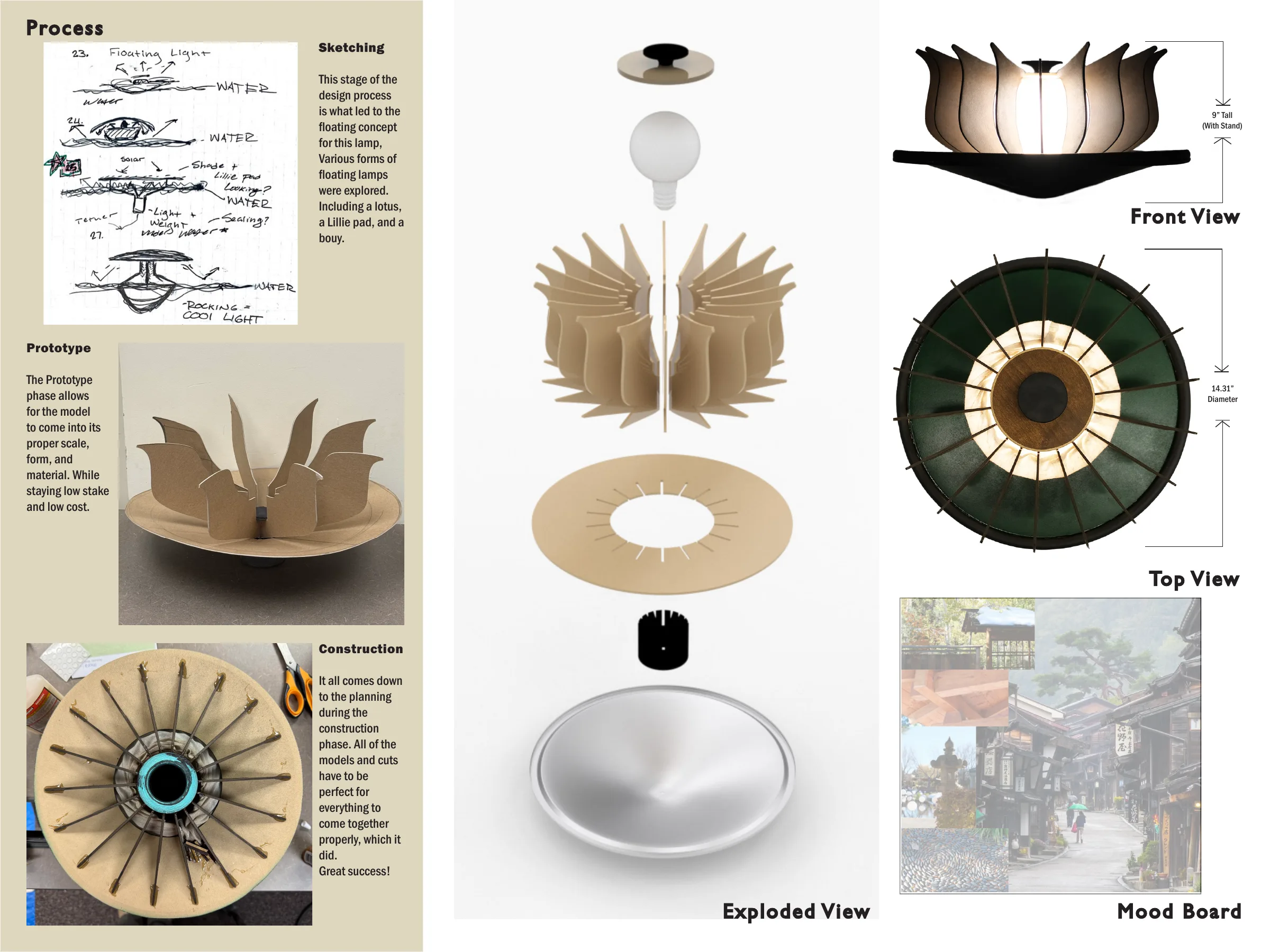
Nimbria process and development
Yasuragi
The long exhale that follows letting go. Reclaimed cedar and layered paper form a floor lamp shaped by Japanese principles of simplicity, imperfection, and depth, designed to exist with darkness rather than eliminate it.
Click any image to view full size
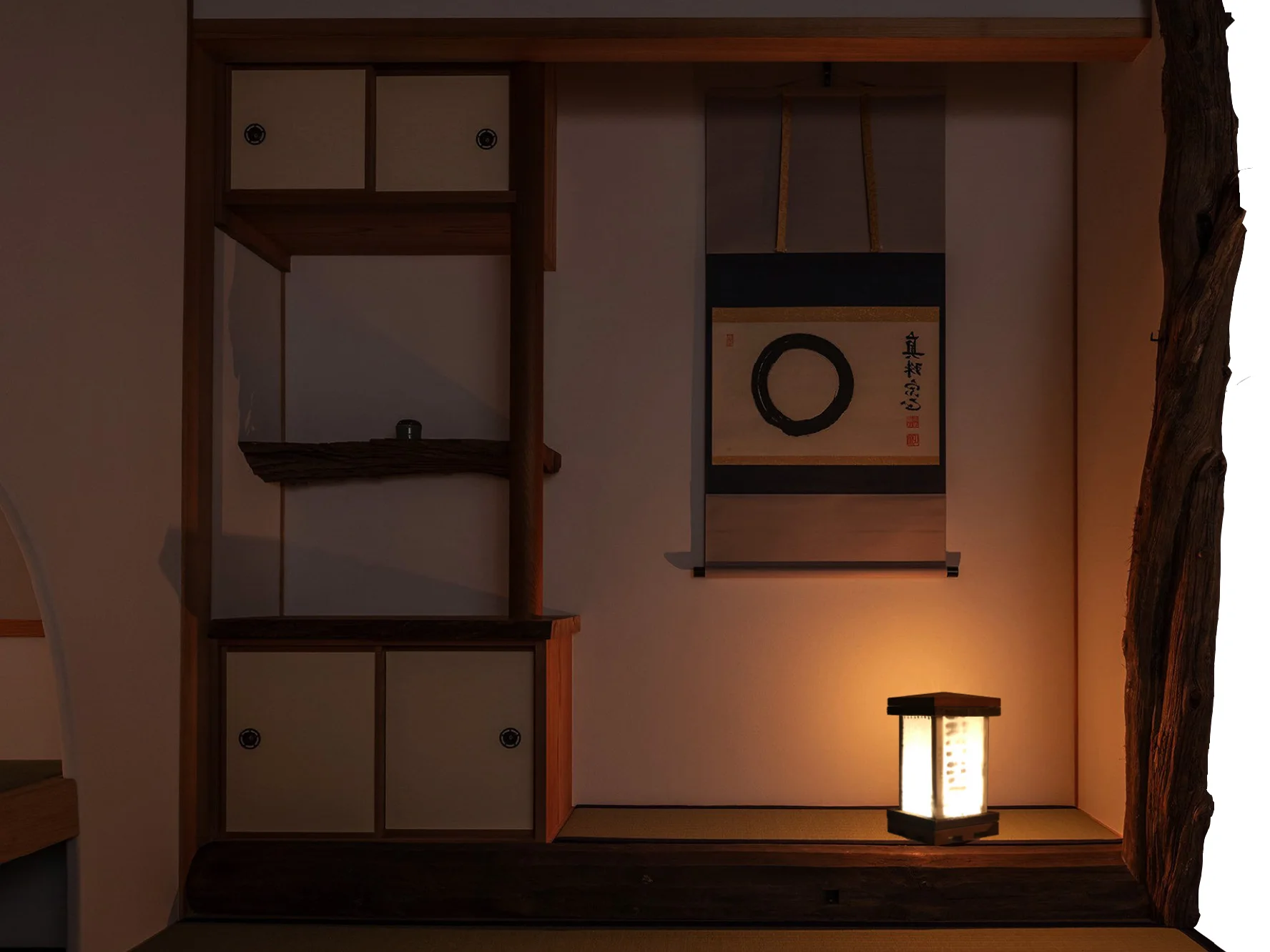
Yasuragi finished luminaire
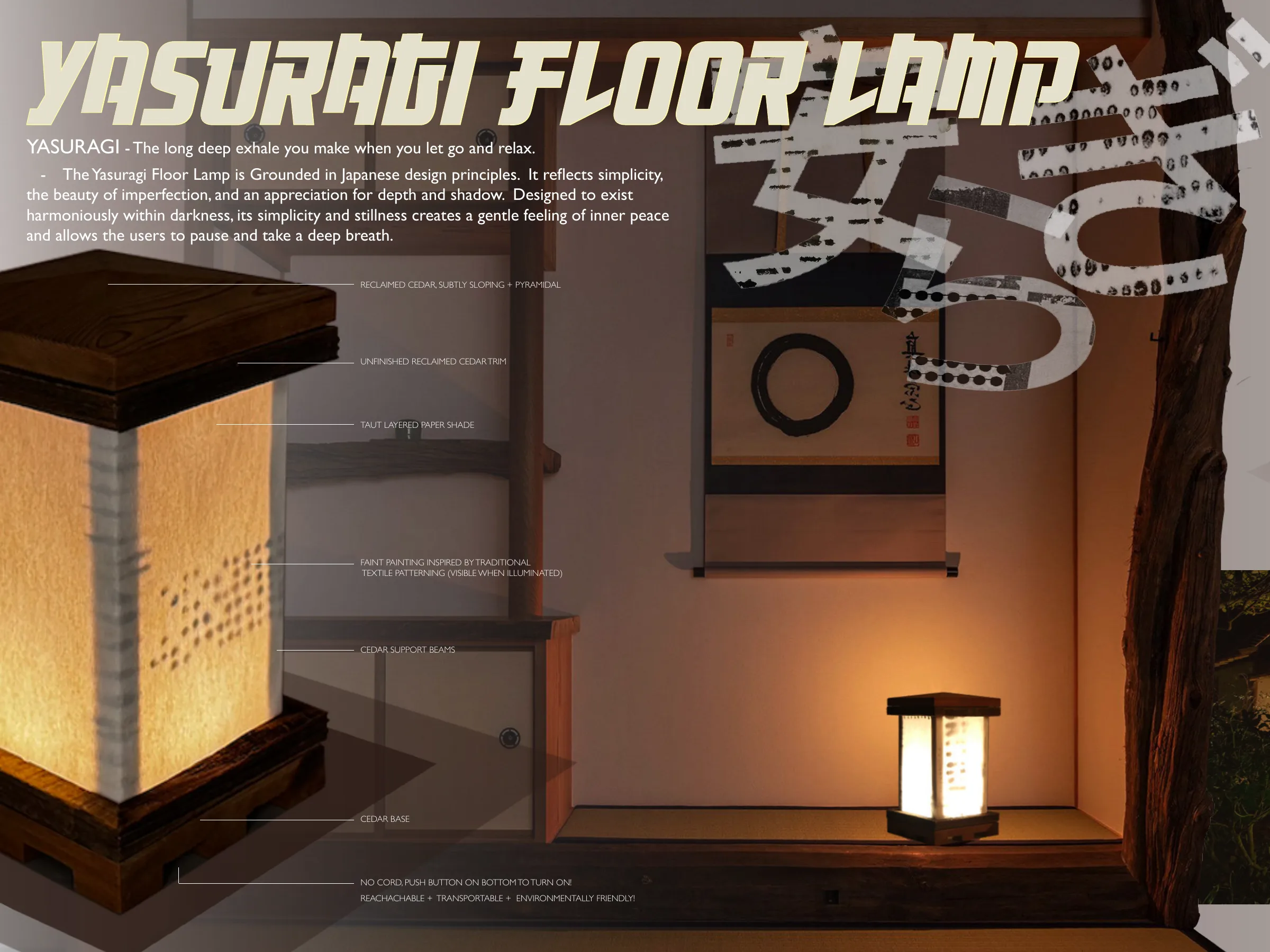
Yasuragi concept and final design
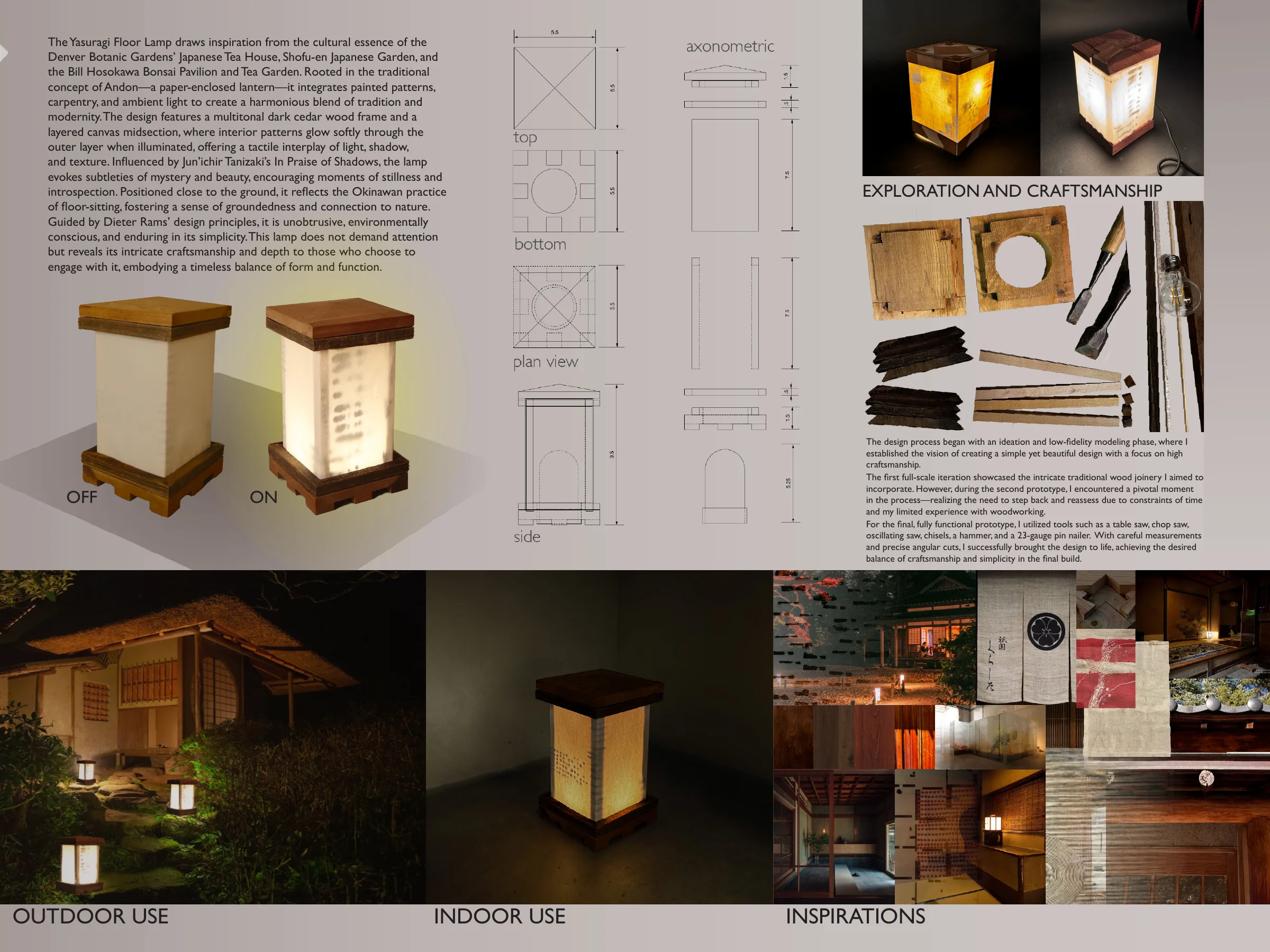
Yasuragi process and development
Lunara
An orchid translated into ambient light. Layered MDF abstracts the curves and veins of orchid petals into a wall sconce for a child's room, with integrated LED strips illuminating the cut pattern for a soft, stable presence.
Click any image to view full size
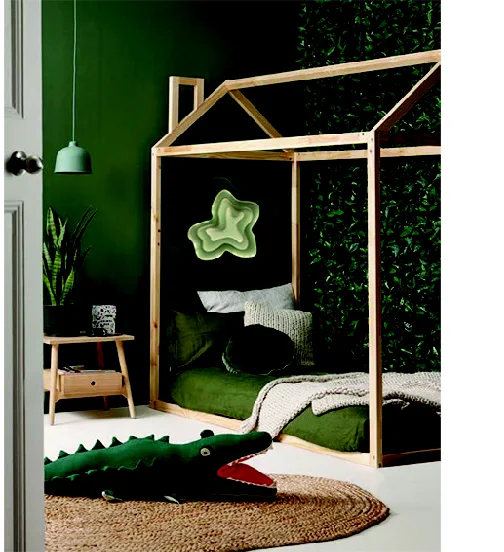
Lunara finished luminaire
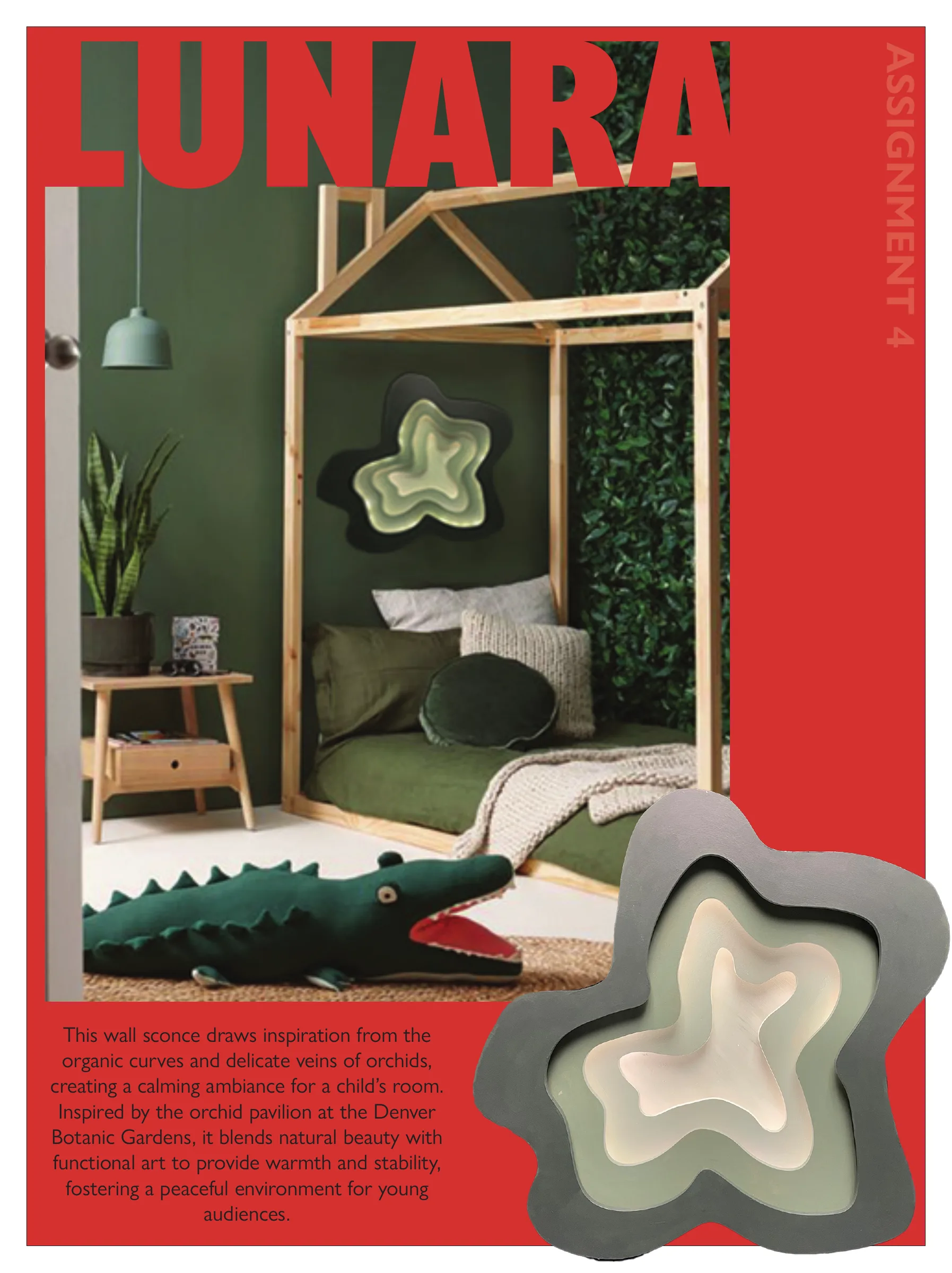
Lunara concept and final design
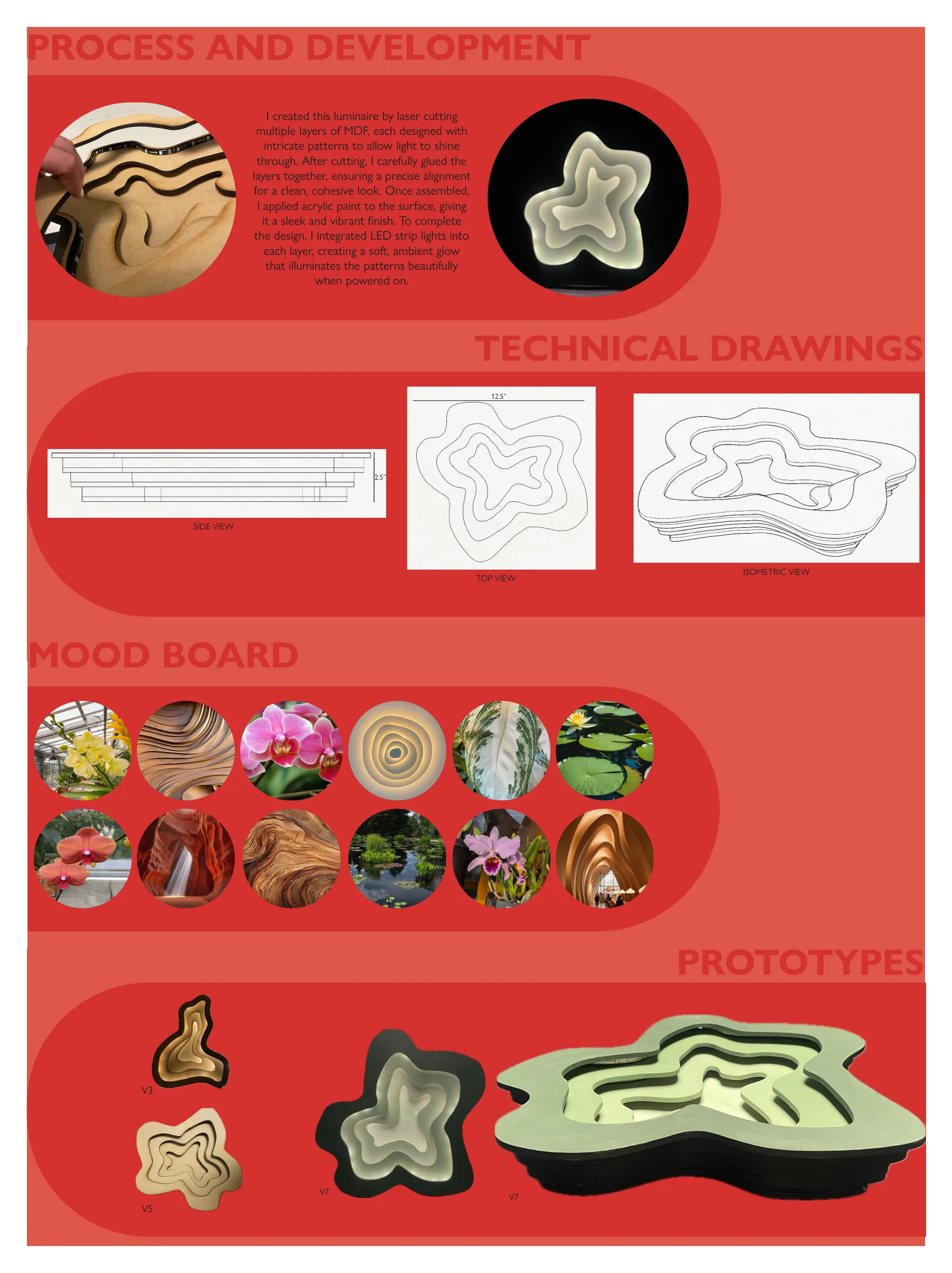
Lunara process and development
Eyrie
Shelter expressed through light and material. Handmade paper gathers around a smooth glass orb in an intentionally imperfect embrace, exploring shelter, sacrifice, memory, and the contrast between constructed form and organic experience.
Click any image to view full size
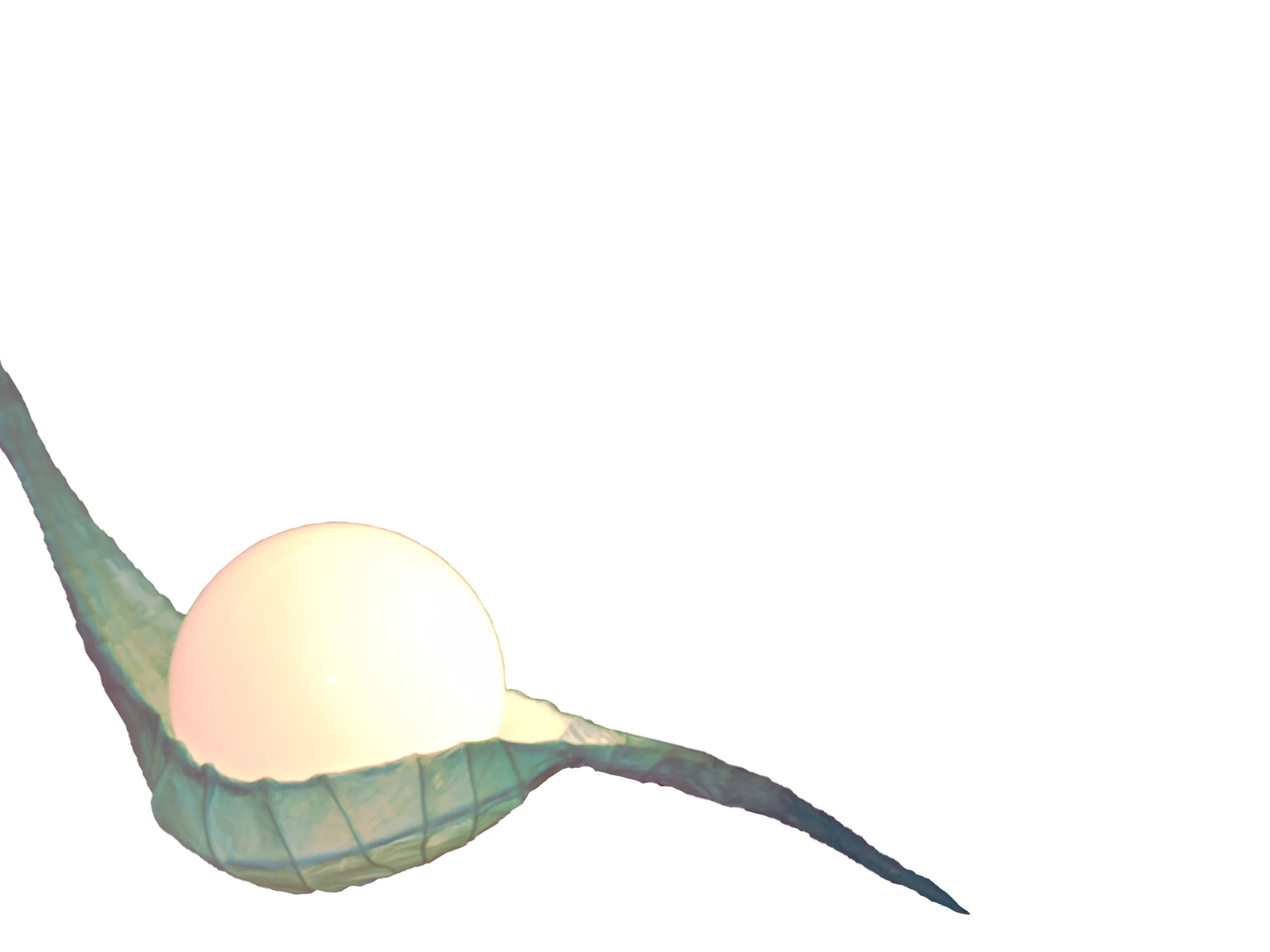
Eyrie finished luminaire
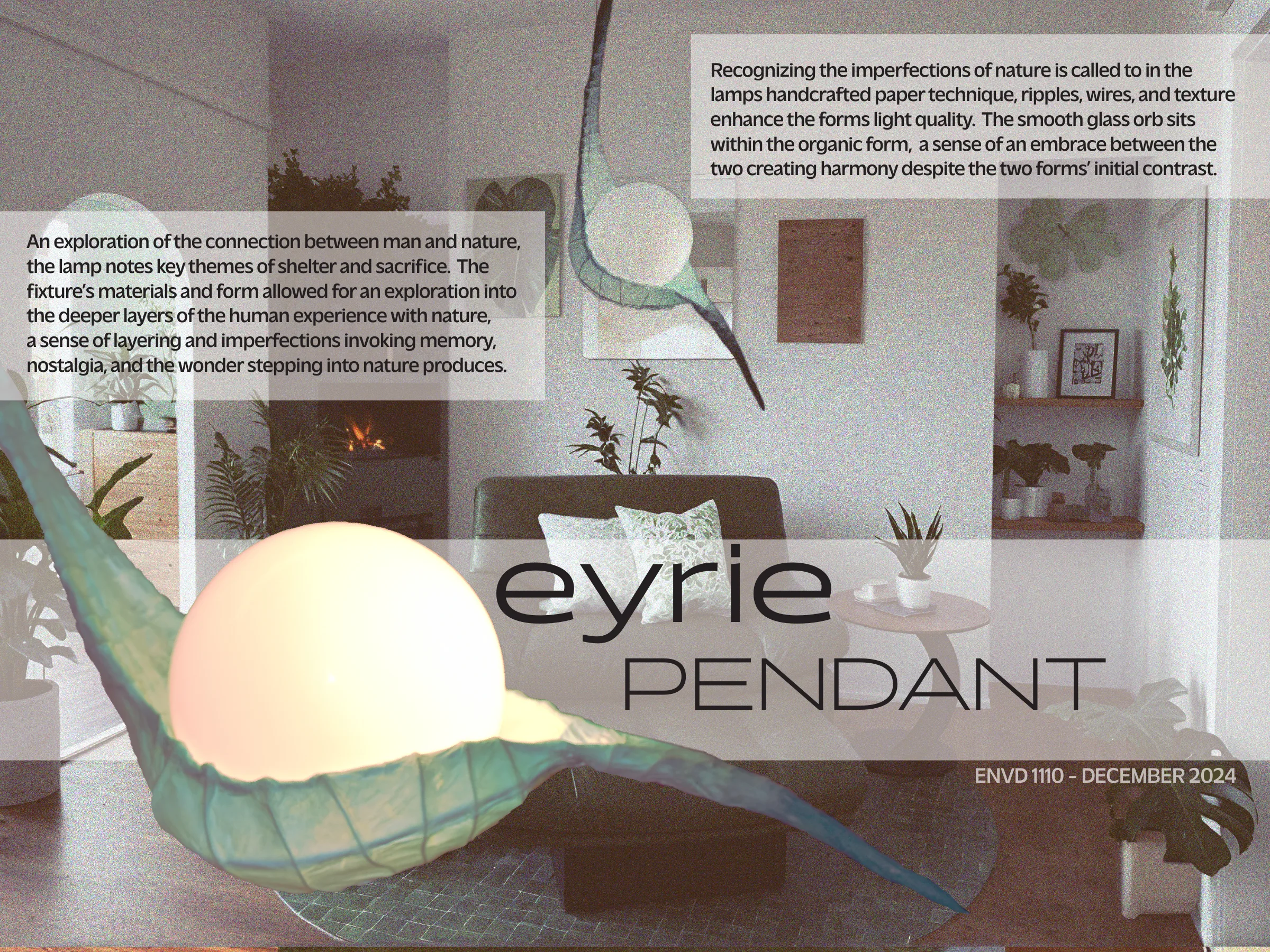
Eyrie concept and final design
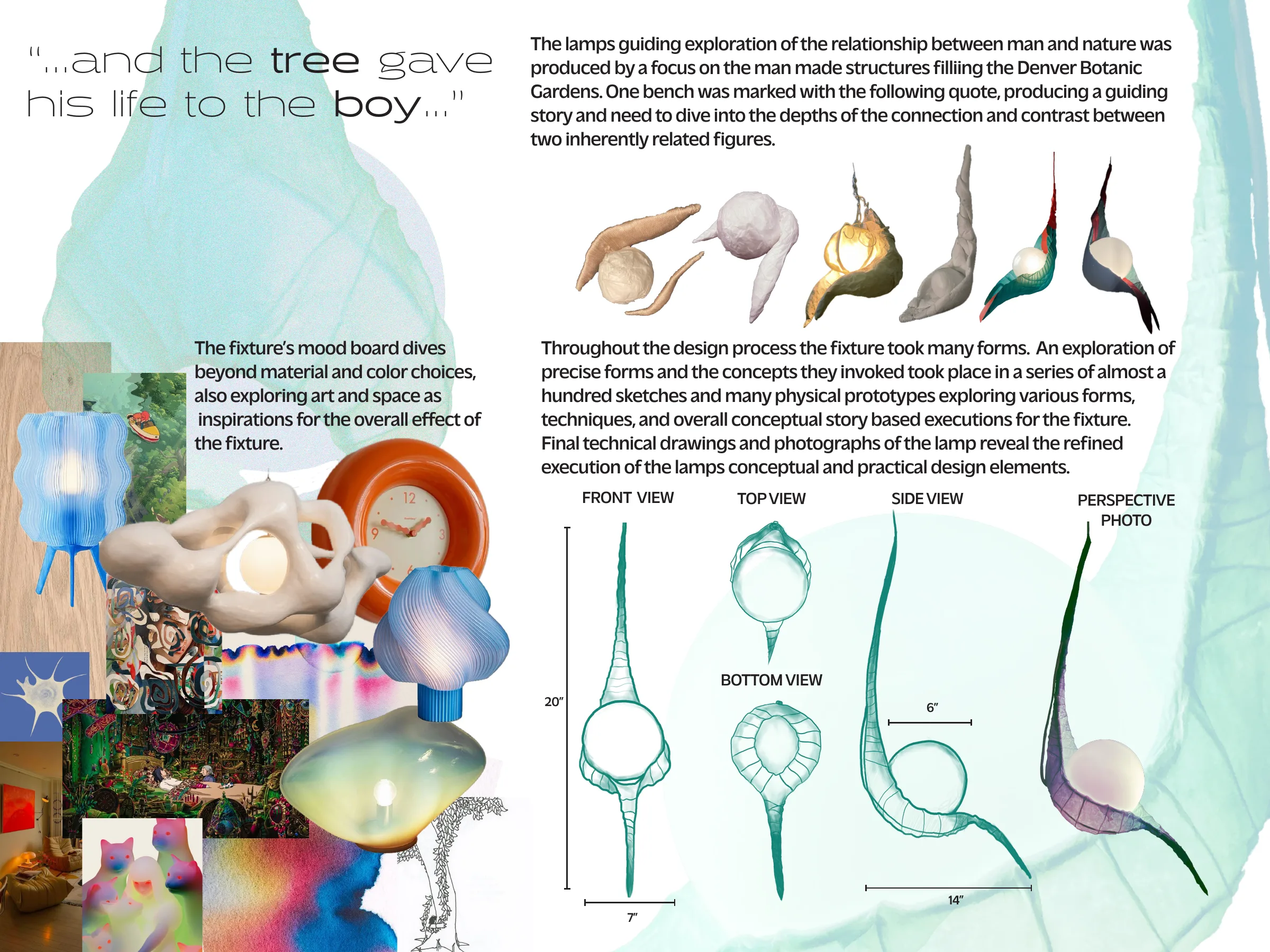
Eyrie process and development
Student Experience
4.92 / 5
Creative synthesis and transformation
4.92 / 5
Challenge to develop conceptual understanding
4.83 / 5
Assignments requiring original or creative thinking
60%
Response rate, 12 of 20 students